

What Drives the Valuation of Luxury Automotive Brands Like Bentley?
A Bentley Continental GT costs more than a house in most of the world. Yet there are waiting lists. That paradox — desire outpacing price — is precisely what makes luxury automotive brand valuation one of the most nuanced disciplines in finance. Understanding what sustains and grows the value of a brand like Bentley means looking well beyond balance sheets, into centuries of craftsmanship, the psychology of aspiration, and the economics of deliberate scarcity.
The Luxury Automotive Market in 2025
The global luxury automotive market crossed an estimated $600 billion in 2024 and shows no sign of decelerating. Unlike mass-market segments — which face cyclical compression from interest rates, fuel price volatility, and consumer confidence shifts — ultra-luxury brands like Bentley operate in a category where economic turbulence barely registers. Their customers buy cars the way others buy watches: as stores of identity, status, and sometimes, financial value.
Brand valuation in this space is rarely a simple discounted cash flow exercise. Analysts at firms like Brand Finance, Interbrand, and Millward Brown layer qualitative factors — emotional resonance, cultural cachet, and storytelling — alongside hard financial metrics like revenue, EBITDA margins, and residual value retention. The result is a multidimensional score that explains why Bentley, producing fewer cars in a year than Toyota makes in hours, can command a brand value estimated between $1.5 billion and $3 billion USD.
Brand Heritage and Legacy: The Foundation of Value
Heritage is, perhaps counterintuitively, one of the most financially valuable assets a luxury brand possesses. For Bentley, that heritage began in 1919 when W.O. Bentley founded the marque in Cricklewood, North London, with an obsession for building “a fast car, a good car, the best in its class.” What followed — five Le Mans victories between 1924 and 1930, royal warrants, and a reputation for engineering excellence — laid the narrative foundation that still justifies the price premium today.
“Heritage cannot be manufactured; it can only be earned across decades. For luxury automotive brands, it is the single most defensible moat against imitation.”
Why heritage translates directly to valuation
Brand valuation methodologies explicitly account for brand strength, which is partly a function of historical consistency. A century of delivering on a promise — in Bentley’s case, the synthesis of performance and luxury — creates what economists call trust capital. This capital is extraordinarily difficult for newer entrants to replicate, which is why even well-funded electric vehicle startups struggle to command comparable prestige multiples despite superior technology.
Heritage also enables brand extension and licensing strategies that pure-play technologists cannot access. Bentley’s lifestyle collections, hotel partnerships, and bespoke furniture collaborations all derive their pricing power from the automotive lineage — each touchpoint reinforces brand equity without diluting the core product.
Bentley’s five consecutive Le Mans victories in the 1920s–30s remain one of the most frequently cited heritage narratives in luxury brand marketing globally. This racing provenance functions as proof of engineering credibility — a credential that money alone cannot buy retroactively.
Craftsmanship and Product Quality: The Tangible Justification
In an age where automation has commoditised manufacturing quality, the deliberate persistence of hand craftsmanship in luxury goods functions as both a production choice and a brand signal. At Bentley’s Pyms Lane factory in Crewe, England — a site with seven decades of automotive history — skilled craftspeople still hand-stitch leather hides, hand-veneer wood panels sourced from sustainable forests, and individually calibrate the famous “bullseye” vents that have appeared on every Bentley since 1952.
How craftsmanship elevates valuation multiples
From a valuation perspective, craftsmanship serves multiple financial functions simultaneously. It acts as a natural barrier to margin compression: handcraft justifies labour-intensive cost structures that would be unjustifiable in mass production, and those costs become brand assets rather than inefficiencies. It also enables bespoke personalisation — a driver of both revenue per vehicle and customer emotional lock-in.
Bentley’s Mulliner division, the world’s oldest coachbuilder, offers customers the ability to specify almost any interior material, colour, or finish. This degree of customisation transforms each vehicle from a product into a personal artefact — and personal artefacts are valued fundamentally differently from commodities, both by buyers and by valuation analysts modelling future revenue per customer.
Hand-stitched interiors
Up to 15 hides per vehicle, 150,000 individual stitches in a single dashboard — each a differentiator from any automated competitor.
Bespoke veneers
Book-matched wood veneers selected from rare global sources, each pattern unique — impossible to replicate at scale.
Engine crafting
The W12 and V8 engines built by a single engineer from start to finish, who signs the completed block — craft as credential.
Mulliner bespoke
Over 100 exterior colours and virtually unlimited interior specifications — personalisation that generates both revenue and loyalty.
Exclusivity and Scarcity: The Economics of Desire
Conventional economic logic holds that lower prices expand markets and drive revenue growth. Luxury economics inverts this relationship. For brands like Bentley, the deliberate constriction of supply — keeping annual production well below demand capacity — is not a manufacturing limitation but a strategic choice that protects brand equity, maintains pricing power, and sustains the social signal that ownership provides.
Scarcity as a financial strategy
When a product is too readily available, its aspirational value degrades. Brand valuation models account for this through what analysts call the “exclusivity premium” — the additional price a buyer will pay above production cost and reasonable margin specifically because of scarcity. For ultra-luxury automotive brands, this premium can account for 30–60% of the transactional price, and it flows directly to EBITDA margins that mass-market manufacturers cannot approach.
Bentley’s limited-edition strategies reinforce this dynamic powerfully. The Bentley Bacalar — limited to 12 examples at approximately £1.5 million each — sold out before a single car was built. The Batur coupé, produced in just 18 units, was similarly oversubscribed. These halo products do not move the volume needle, but they anchor perception of the entire brand at an elevated tier, making even Bentley’s more accessible models feel exclusive by association.
| Strategy | Mechanism | Valuation impact | Bentley Example |
|---|---|---|---|
| Volume caps | Annual production ceiling maintained below demand | High | ~13,000 vehicles/year globally |
| Limited editions | Ultra-rare halo products anchor brand perception | High | Bacalar (12 units), Batur (18 units) |
| Bespoke customisation | Every car unique; re-purchase required for new preferences | High | Mulliner division, unlimited specs |
| Waitlists | Demand signal visible to market; reinforces desirability | Medium | Common across key model lines |
| Market segmentation | Selective dealer network, curated ownership experiences | Medium | Bentley Inspirator app, private events |
Pricing Power and Profit Margins: The Financial Core
If heritage is the soul of luxury brand valuation and craftsmanship is its body, pricing power is its financial heartbeat. Pricing power — the ability to raise prices without losing customers — is the single clearest indicator of brand health and one of the most heavily weighted variables in formal brand valuation models.
Why luxury automotive margins dwarf mainstream competitors
Mass-market automotive manufacturers typically operate on operating margins of 3–8%. Premium brands like BMW and Mercedes-Benz achieve 10–14%. Ultra-luxury brands like Bentley, Rolls-Royce, and Ferrari regularly post operating margins of 20–30% or higher — a testament to pricing power that no amount of volume can replicate at the lower end of the market.
This margin structure compounds in valuation calculations. When analysts apply enterprise value multiples to EBITDA, a brand generating 25% operating margins on £3.9 billion in revenue commands a fundamentally different valuation than a brand earning 6% on £10 billion. The luxury model is not merely more profitable per unit — it is structurally superior as a business, with lower customer acquisition costs, higher lifetime value, and greater resilience to macro-economic shocks.
“Bentley customers do not postpone purchases because interest rates rise by 1%. Understanding that immunity to economic cycles is the beginning of understanding luxury brand valuation.”
Residual value as a brand indicator
Residual value retention — how much of a car’s purchase price is preserved over time — is a direct, market-tested measure of brand strength. Bentley models have historically retained value significantly better than mass-market competitors, and limited editions frequently appreciate in value, entering the collector car market where they are no longer automotive products in the conventional sense but alternative financial assets. This collector dimension adds a speculative premium to the brand that feeds back into new-car demand.
Global Demand Drivers: Who Buys Bentley and Why It Matters
A brand’s valuation is inseparable from the geography and demographics of its demand. For Bentley, understanding where growth is coming from — and which customer profiles are emerging — is central to any forward-looking valuation thesis.
The ultra-high-net-worth customer
Bentley’s primary customer is typically an ultra-high-net-worth individual (UHNWI) — someone with investable assets exceeding $30 million. According to Knight Frank’s Wealth Report, the global UHNWI population has grown consistently over the past decade, with the fastest growth in Asia-Pacific, the Middle East, and North America. Each of these regions has become a growth market for Bentley.
China, long the world’s largest luxury goods market, experienced a recalibration from 2022–2024, but structural demand from emerging billionaires in Southeast Asia, India, and the Gulf Cooperation Council states has more than compensated. Bentley’s geographic diversification — no single market accounting for more than 35% of global sales — is itself a valuation positive, reducing concentration risk in analyst models.
Younger buyer demographics: the valuation opportunity
One of the most significant demand-side developments is the emergence of younger ultra-luxury buyers. Millennial and Gen-Z ultra-high-net-worth individuals — who have built wealth through technology, finance, and entrepreneurship at younger ages than any previous generation — are buying Bentleys in their 30s and early 40s, a decade younger than the brand’s traditional buyer profile. This shift extends customer lifetime value projections and represents a structural tailwind for brand valuation models that account for long-term demand sustainability.
Customer lifetime value is a key input in brand valuation. A buyer who makes their first purchase at 38 rather than 52 represents not only one additional purchase cycle but also a longer period of brand advocacy — a multiplier on both direct revenue and referral value in networks where peer influence drives purchasing decisions at the ultra-luxury tier.
Electrification and the Future of Luxury Brand Value
Perhaps no question is more debated in luxury automotive brand valuation circles than the impact of electrification. The transition to battery electric vehicles (BEVs) presents both existential risk and significant opportunity for established luxury marques — and how brands like Bentley navigate it will materially shape their valuations in the decade ahead.
The electrification paradox for legacy brands
Electrification removes the internal combustion engine — historically one of the primary vectors for engineering differentiation in premium automotive brands. A W12 engine, representing decades of refinement and hand-assembly by a single craftsperson, is a heritage asset. A battery pack, however sophisticated, is a commodity component increasingly available from multiple suppliers. This creates what analysts describe as a product differentiation gap: as powertrains standardise, brands must find new vectors for premium justification.
Bentley’s response has been “Beyond100” — its electrification strategy targeting a fully battery-electric lineup by 2033. Critically, the brand is not repositioning as a technology company. Instead, it is translating its craft traditions into the electric domain: bespoke interiors, advanced sustainable materials (including innovative bio-based veneers and recycled ocean plastics), and proprietary software experiences that reflect the brand’s sensory ethos in a new powertrain context.
Why the transition strengthens rather than weakens valuations
Counterintuitively, the electrification transition may enhance long-term brand valuations for well-managed luxury marques. Environmental regulatory alignment reduces the risk of model line discontinuation due to emissions legislation. Access to younger, sustainability-conscious ultra-wealthy buyers expands the addressable market. And the shift opens genuinely new premium territory — ultra-high-performance electric powertrains can exceed the dynamism of any combustion engine, creating new performance narratives that re-energise heritage storytelling.
Performance narrative
Electric powertrains offer instant torque exceeding any combustion engine — a new chapter in Bentley’s performance legacy.
Sustainability premium
Younger ultra-wealthy buyers weight environmental credentials — a brand asset in its own right for the next generation of valuation models.
Regulatory resilience
Early EV transition reduces exposure to combustion bans across Europe, China, and major US states — reducing tail risk in valuations.
New differentiation vectors
Software, ambient sound design, and haptic experiences create fresh luxury territory that new entrants cannot easily replicate with heritage.
Frequently Asked Questions
These are the questions analysts, investors, and enthusiasts most frequently ask about luxury automotive brand valuation. Answering them precisely is part of what makes this topic genuinely complex.
What is the estimated brand value of Bentley in 2025?
Bentley Motors is a wholly owned subsidiary of Volkswagen Group and is not independently publicly traded, so brand value estimates vary by methodology. Brand Finance and Interbrand analyses place Bentley’s brand value in the range of $1.5–$3 billion USD. When combined with the parent VW Group’s luxury portfolio — including Porsche, Lamborghini, Audi, and Bugatti — the combined luxury segment valuation runs well above $50 billion. Bentley’s own record revenues of £3.9 billion in 2023 suggest the higher end of independent estimates is defensible.
How do luxury car brands protect their valuations during recessions?
Ultra-luxury automotive brands display remarkable resilience during economic downturns because their customer base — ultra-high-net-worth individuals — holds wealth predominantly in appreciating assets (equities, real estate, private businesses) rather than income. A recession that reduces consumer spending across the economy rarely translates into reduced Bentley demand, as the relevant wealth cohort is largely insulated from employment shocks. This counter-cyclicality is itself a valuation premium; analysts apply lower risk discount rates to brands with proven demand stability.
Does selling more cars increase or decrease a luxury brand’s value?
The relationship is non-linear and brand-specific. For ultra-luxury brands, significant volume increases typically erode brand value by diluting exclusivity — the so-called “accessible luxury paradox.” Brands that have expanded volumes aggressively have sometimes found their aspirational positioning damaged in ways that took years to repair. Bentley’s deliberate volume ceiling — roughly 13,000–15,000 vehicles annually — is not a production constraint but a brand protection strategy, ensuring demand always exceeds supply and the ownership signal remains meaningful.
What role does country of origin play in luxury automotive brand value?
Country of origin effects are significant and empirically well-documented in luxury brand research. “Made in England” carries specific connotations — tradition, understatement, craftsmanship, and legal precision — that align closely with the Bentley brand proposition. Research by Kapferer and Bastien (the leading academic authorities on luxury brand management) demonstrates that authentic provenance commands consistent price premiums across global luxury markets, particularly in Asia, where British heritage is associated with institutional quality and social prestige.
How does Bentley’s position within Volkswagen Group affect its brand valuation?
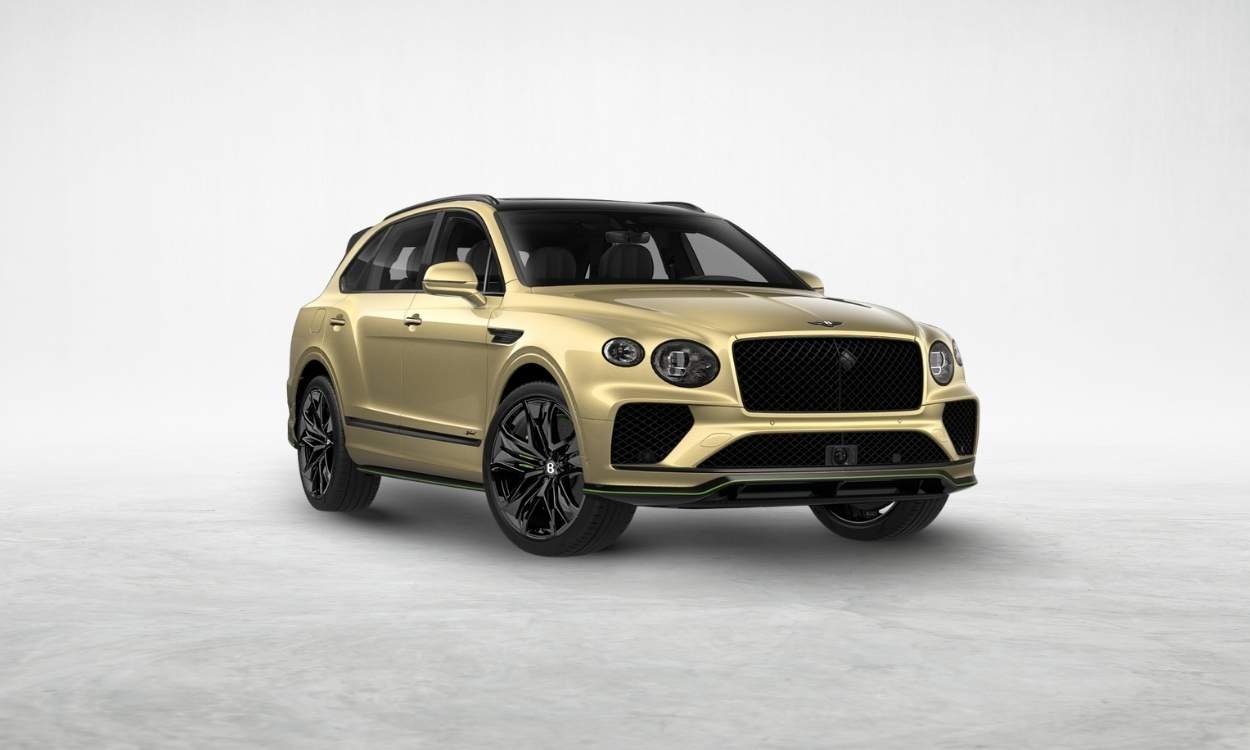
Group ownership is a double-edged variable. On the positive side, VW Group provides financial stability, shared engineering platforms (enabling Bentley to co-develop powertrains with Porsche and Audi at economies of scale), and investment capital for electrification. On the negative side, the association with a mass-market parent creates some brand distance challenges — a risk VW Group manages by allowing Bentley, Porsche, Lamborghini, and Rolls-Royce to operate with significant independence. The Bentayga SUV, built on the Audi Q7/Porsche Cayenne platform, demonstrates both the efficiency benefit and the need for rigorous brand management to maintain differentiation at the ultra-luxury tier.
The Alchemy Behind the Valuation
The valuation of a luxury automotive brand like Bentley is not reducible to a single formula. It emerges from the intersection of six mutually reinforcing forces: a heritage narrative earned over more than a century, a commitment to craftsmanship that resists automation, a deliberate scarcity model that sustains desire, structural pricing power that produces exceptional margins, demand from a growing global ultra-wealthy cohort, and a forward-looking electrification strategy that preserves the brand’s relevance without abandoning its soul.
What makes this analysis practically significant — beyond academic interest — is its implication for anyone investing in, competing against, or studying these brands. The moats protecting luxury automotive valuations are not primarily technological or capital-intensive. They are narrative, cultural, and reputational. And that makes them both harder to build and, once built, extraordinarily durable.
Bentley is not simply a car company. It is a 105-year-old promise about what excellence feels like — and the ongoing willingness of a small, carefully defined group of customers worldwide to pay handsomely to keep that promise in their garage.
