


If you stepped outside this morning and noticed the Stars and Stripes flying lower than usual, you likely found yourself asking: “Why are flags at half mast today?”
The sight of a flag at half-staff (or half-mast, depending on where it’s flown) is a powerful visual signal. It immediately evokes a sense of solemnity and national mourning. But unless there is a major headline dominating the news cycle, the specific reason isn’t always obvious. Flags are lowered for a variety of occasions—from the passing of government officials and foreign dignitaries to the commemoration of tragic events and recognized days of mourning.
This guide explores the history, protocols, and common reasons why you might see the flag lowered, helping you understand the silent message flying above your head.
What Does Flying a Flag at Half-Staff Mean?
Flying a flag at half-staff is an international symbol of mourning, distress, or respect. When a flag is hoisted to this position, it signifies that the nation or community is in a state of grief. The empty space at the top of the flagpole is symbolically left for the “invisible flag of death,” a tradition that dates back centuries.
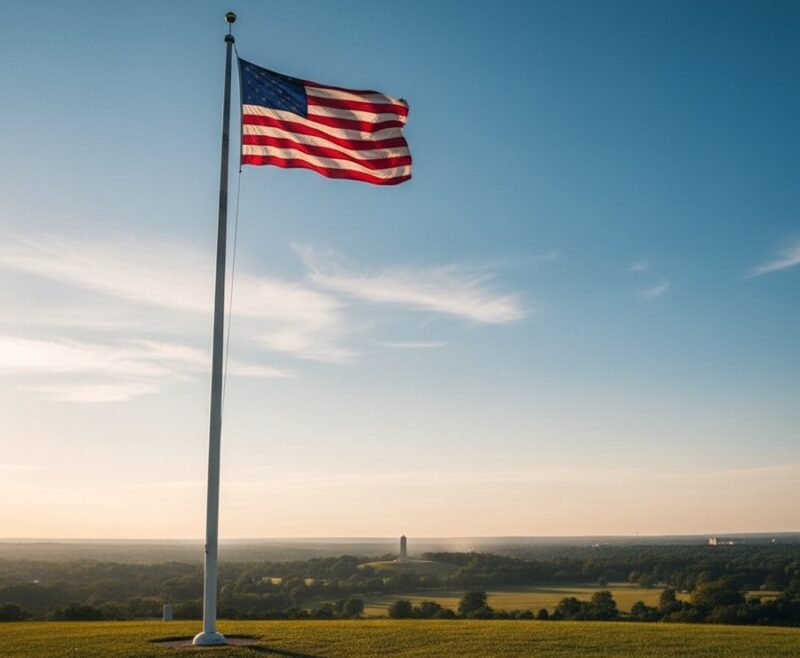
While the terms are often used interchangeably in casual conversation, there is a technical difference. “Half-staff” refers to a flag flown on a pole planted in the ground or on a building. “Half-mast” technically refers to flags flown on a ship or naval base. However, generally speaking, most people understand both terms to mean the same gesture of respect.
The Origins of the Tradition
The tradition of lowering flags dates back to the 17th century. One of the earliest recorded instances occurred in 1612, when the crew of the British ship Heart’s Ease returned from an expedition to Greenland with their flag at half-mast to signal the death of their captain. Over time, this maritime signal of distress evolved into a universal gesture of mourning adopted by governments worldwide.
Common Reasons Flags Are Flown at Half-Staff
So, why are flags at half mast today? While specific proclamations change daily, the United States Flag Code outlines clear scenarios for when this honor is bestowed.
1. Death of Principal Government Figures
The President of the United States has the authority to order the flag to be flown at half-staff upon the death of principal figures of the United States government. This includes:
- Current or Former Presidents: Flags are flown at half-staff for 30 days.
- The Vice President, Chief Justice, or Speaker of the House: Flags are lowered for 10 days.
- Associate Justices of the Supreme Court or Cabinet Members: Flags fly at half-staff until interment.
2. Death of Foreign Dignitaries
The President may also order flags to be lowered to mark the death of a foreign dignitary. This is a diplomatic gesture of respect and solidarity with other nations during their times of loss.
3. Tragic Events and National Mourning
In the wake of tragic events, such as mass shootings, terrorist attacks, or natural disasters resulting in significant loss of life, the President (or state Governors) may issue a proclamation to lower flags. This serves as a mark of respect for the victims and a symbol of national unity in grief.
4. Designated Days of Remembrance
Certain days on the calendar are permanently designated for half-staff observance:
- Peace Officers Memorial Day (May 15): Unless it falls on Armed Forces Day.
- Memorial Day (Last Monday in May): Flags are flown at half-staff only until noon, then raised to full-staff for the remainder of the day.
- Patriot Day (September 11): To honor the victims of the 9/11 attacks.
- National Pearl Harbor Remembrance Day (December 7): To honor those lost in the attack on Pearl Harbor.
- National Firefighters Memorial Day (Typically in October): To honor fallen firefighters.
Who Has the Authority to Order Flags to Half-Staff?
Confusion often arises regarding who actually makes the call. Is it just the President? Can your local mayor decide?
Presidential Proclamations
The President of the United States has the primary authority to order the flag to be flown at half-staff on all federal government buildings, grounds, and naval vessels. These proclamations are usually distributed through the White House press office and news outlets.
Gubernatorial Authority
State Governors also have the authority to order flags to half-staff within their state boundaries. This is often done to honor fallen soldiers from that state who have died in active duty, or to mark the passing of significant state officials or first responders. If you see a flag at half-staff in your specific town but not on national news, it is likely due to a state-level proclamation.
The “Mayor’s Loophole”
While the federal Flag Code does not explicitly give mayors of cities the authority to order flags to half-staff, many do so to honor local heroes or recognize local tragedies. This is generally accepted as a gesture of community respect, even if it falls outside strict federal statutes.
Proper Flag Etiquette and Protocol
Displaying the American flag comes with a strict set of rules known as the U.S. Flag Code. When flying a flag at half-staff, there is a specific procedure that must be followed to show proper respect.
How to Raise the Flag
You do not simply raise the flag halfway up the pole. The proper protocol is to first hoist the flag to the peak (the very top of the staff) for an instant, and then lower it slowly to the half-staff position.
How to Lower the Flag for the Day
When retrieving the flag at sunset (or when it is being taken down), it should specifically be raised to the peak again before being lowered all the way down.
What is the Correct “Half-Way” Point?
“Half-staff” does not literally mean the flag must be exactly in the middle of the pole. The flag should be flown at least the width of the flag itself down from the top. Essentially, it should look visibly lowered, creating a distinct space of mourning above it.
How to Find Out Why Flags Are Lowered Today
If you are looking for the specific reason for today’s half-staff status, there are reliable resources you can check:
- The White House Website: Presidential proclamations are posted here immediately.
- Your State Governor’s Website: Check specifically for state-level orders, which are very common.
- Flag Status Notifications: Several websites and apps are dedicated solely to tracking flag status and will send you alerts.
Honoring the Symbolism
The question “why are flags at half mast today” is more than just a query about news; it’s an acknowledgment of shared loss. Whether it is for a national figure, a local hero, or a day of remembrance, the act of lowering the flag connects us in a moment of reflection. It is a visual reminder that regardless of our differences, we share in the sorrows and honors of our nation.
By understanding the protocols and reasons behind this tradition, we can better appreciate the depth of meaning woven into the fabric of the flag.
Frequently Asked Questions (FAQs)
Can I fly my home flag at half-staff?
Yes, private citizens can fly their flags at half-staff to join in national or state mourning. If your flag is mounted on a fixed pole that doesn’t allow for lowering (like many home porch kits), you can attach a black mourning ribbon to the top of the pole as an alternative sign of respect.
How long should the flag remain at half-staff?
It depends on the specific proclamation. For Memorial Day, it is only until noon and the death of a President, it is 30 days, also most other proclamations, it is typically until sunset on the day of interment or for a specific number of days outlined in the order.
Is it disrespectful to fly the flag at half-staff for personal reasons?
According to the Flag Code, the flag should only be flown at half-staff upon the order of the President or a Governor. While private citizens often wish to express personal grief, using the American flag for private mourning is technically considered a breach of proper flag etiquette.
What is the difference between half-staff and half-mast?
Technically, “half-mast” is used for flags flown on ships or naval stations, while “half-staff” refers to flags flown on land. However, the terms are widely used interchangeably by the general public and media.
Also read: Where is Morocco? A Guide to Location, Culture & Top Cities
