

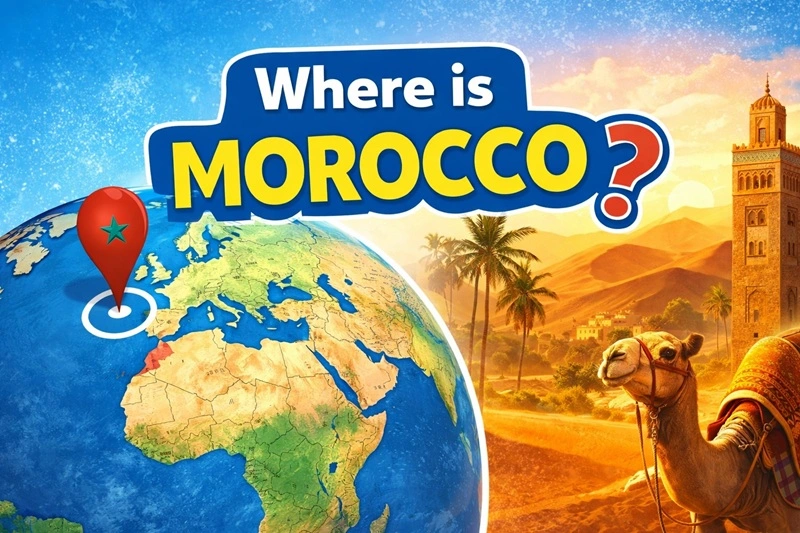
The scent of cumin and saffron drifting through the air, the dazzling mosaics of ancient palaces, and the chaotic charm of bustling souks—Morocco is a sensory overload in the best possible way. But before you book your ticket to this North African gem, you might find yourself asking the basics: where is Morocco, exactly?
It’s a fair question. Sitting at the crossroads of Europe and Africa, Morocco has served as a bridge between cultures for centuries. This unique positioning is what gives the country its distinct flavor—a fascinating blend of Arab, Berber, and European influences. Whether you are a student researching geography or a traveler dreaming of mint tea in a riad, understanding where Morocco is located is the first step to unlocking its secrets.
In this guide, we’ll pinpoint Morocco on the map, dive into its vibrant culture, and explore the cities that make it a top travel destination.
A Geographical Crossroads: Where Is Morocco Located?
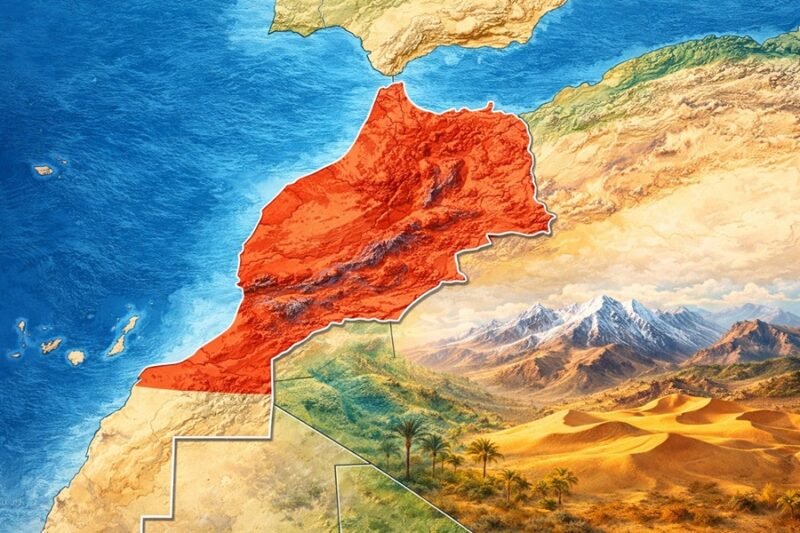
To answer the primary question—where is Morocco located?—you need to look at the northwestern corner of the African continent. Morocco is bordered by the Atlantic Ocean to the west, the Mediterranean Sea to the north, Algeria to the east, and Western Sahara to the south.
What makes its location so strategic is its proximity to Europe. At its northernmost point, Morocco is separated from Spain by the Strait of Gibraltar, a narrow stretch of water only about 9 miles (14 kilometers) wide. On a clear day in Tangier, you can easily see the Spanish coast.
This geography is crucial to understanding the country. Because it sits on both the Atlantic and Mediterranean coasts, Morocco boasts diverse landscapes ranging from sandy beaches to the snow-capped Atlas Mountains and the golden dunes of the Sahara Desert.
The Lay of the Land: Key Geographical Features
- The Atlas Mountains: This massive mountain range slices through the center of the country, separating the fertile coast from the arid Sahara.
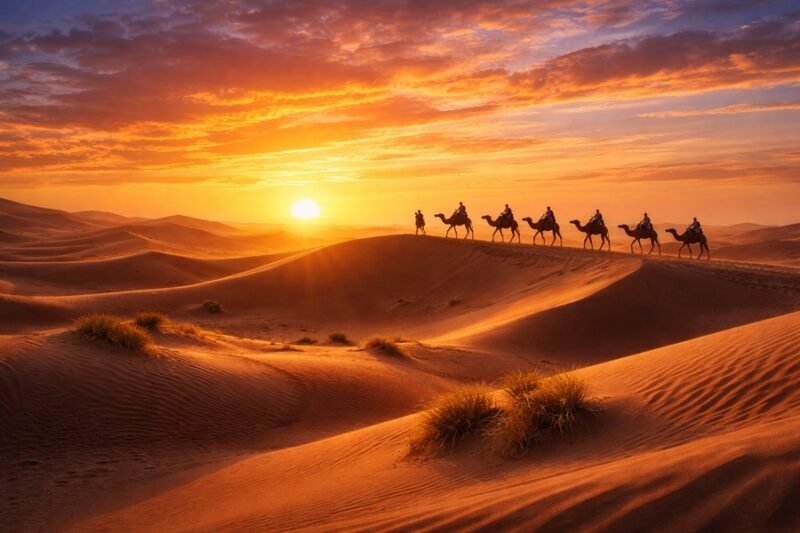
- The Sahara Desert: To the south and east lies the world’s largest hot desert, offering incredible opportunities for camel trekking and camping under the stars.
- The Coastline: With over 1,800 miles of coastline, Morocco offers everything from surf towns like Taghazout to historic ports like Essaouira.
Symbols of a Nation: The Morocco Flag
When you arrive, one of the first things you will notice is the vibrant red flag with a green star in the center. The Morocco flag is rich in symbolism and history.
The red background represents the royal Alaouite dynasty, which has ruled Morocco since the 17th century. It also symbolizes strength and bravery. In the center lies a green, five-pointed star known as the Seal of Solomon (Sulayman). Green is the traditional color of Islam, reflecting the country’s deep religious roots. The five points of the star represent the five pillars of Islam, reminding citizens and visitors alike of the spiritual foundation that underpins Moroccan society.
Experiencing the Culture: More Than Just a Place on a Map
Knowing where is Morocco is one thing, but understanding its soul is another. Moroccan culture is a tapestry woven from indigenous Berber (Amazigh) traditions, Arab conquests, and French and Spanish colonial history.
Language and Hospitality
While the official languages are Arabic and Amazigh, you will hear a symphony of tongues in the streets. French is widely used in business and government, and many people in the north speak Spanish. In major tourist hubs, English is becoming increasingly common.
Hospitality is paramount here. If you are invited into a Moroccan home, expect to be treated like royalty. The ritual of pouring mint tea—often from high above the cup to create a frothy top—is a sign of welcome and friendship. Refusing a cup can be seen as impolite, so sit back, sip slowly, and enjoy the sweetness.
Cuisine
Moroccan food is famous worldwide, and for good reason. The cuisine relies heavily on spices like cinnamon, cumin, turmeric, and ginger.
- Tagine: A slow-cooked stew named after the conical clay pot it is cooked in.
- Couscous: Often served on Fridays, this semolina dish is steamed to perfection and topped with vegetables and meat.
- Pastilla: A unique pie that combines sweet and savory flavors, typically filled with pigeon or chicken, almonds, and dusted with powdered sugar.
Must-Visit Destinations: Top Cities to Explore
Morocco isn’t just one experience; it’s many. Each city has its own distinct personality, from the blue-washed walls of Chef chaouen to the modern bustle of Casablanca.
Marrakech Morocco: The Red City
For many travelers, Marrakech Morocco is the entry point into the country’s magic. Known as the Red City due to its sandstone buildings, Marrakech is a sensory whirlwind.
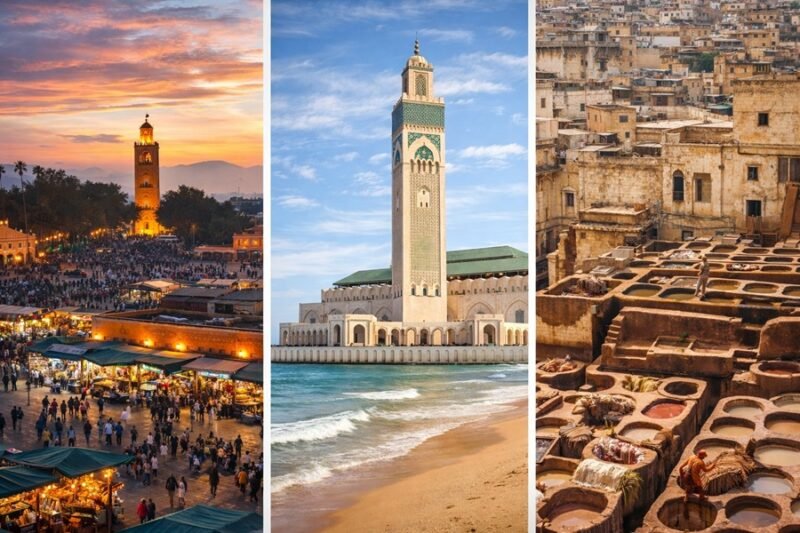
The heart of the city is Jemaa el-Fnaa, a massive square that transforms every night. By day, you’ll find snake charmers and juice vendors. By night, it fills with food stalls, storytellers, and musicians. Just wandering through the winding alleyways of the Medina (old city) is an adventure. You will get lost, but that is part of the fun. Discover hidden palaces like the Bahia Palace or find tranquility in the Majorelle Garden, once owned by Yves Saint Laurent.
Casablanca: Modernity Meets History
If you are looking for the business hub of the country, look no further than Casablanca. While it may not have the ancient medieval feel of Fes or Marrakech, it offers a fascinating glimpse into modern Morocco.
One practical thing to note for travelers is Casablanca Morocco time. Morocco generally observes Western European Time (WET), which is the same as London. However, they do observe Daylight Saving Time, so it is always wise to double-check the local time upon arrival to keep your itinerary on track.
The crown jewel of Casablanca is the Hassan II Mosque. It is one of the largest mosques in the world and one of the few in Morocco that non-Muslims can enter (on guided tours). Perched right on the edge of the Atlantic Ocean, its minaret soars 210 meters into the sky, complete with a laser pointing toward Mecca.
Fes: The Spiritual Capital
If Marrakech is the chaotic heart, Fes is the spiritual soul. The city is home to the University of Al Quaraouiyine, founded in 859 AD, making it the oldest existing, continually operating educational institution in the world.
The Medina of Fes (Fes el Bali) is a UNESCO World Heritage site and is believed to be the largest car-free urban area in the world. Donkeys and handcarts are the main modes of transport here. Be sure to visit the Chouara Tannery, where you can watch leather being dyed in stone vessels just as it has been for centuries.
Practical Tips for Your Moroccan Adventure
Now that you know where is Morocco located and what to see, here are a few quick tips to make your trip smoother.
- Currency: The currency is the Moroccan Dirham (MAD). It’s a closed currency, meaning you can’t get it outside the country, so bring cash to exchange or use ATMs upon arrival.
- Dress Code: Morocco is a conservative country. While tourist areas are relaxed, it is respectful to dress modestly. Covering shoulders and knees is recommended for both men-women.
- Bargaining: In the souks, bargaining is expected. It’s a game, a conversation, and a social interaction all rolled into one. Start by offering half the asking price and work your way to a middle ground.
Frequently Asked Questions about Morocco
Is Morocco safe for tourists?
generally, yes. Morocco is politically stable and welcomes millions of tourists annually. However, like any destination, petty crime like pickpocketing can occur in crowded areas. It’s always smart to stay aware of your surroundings and avoid unlit areas at night.
Do I need a visa to visit Morocco?
Many nationalities, including citizens of the US, Canada, the UK, and the EU, do not need a visa for stays of up to 90 days. However, entry requirements can change, so you should always check with the nearest Moroccan consulate before your trip.
What is the best time of year to visit?
Spring (mid-March to May) and Autumn (September to October) are ideal. The weather is warm but pleasant. Summer can be intensely hot, especially in Marrakech and the south, while winters can be surprisingly chilly, particularly in the mountains.
Can I drink the tap water in Morocco?
It is generally recommended that tourists stick to bottled or filtered water. While tap water is treated in major cities, your stomach might not be used to the local minerals and bacteria, which could cause minor upsets.
Image Prompt: A traveler holding a glass of mint tea with a warm, welcoming smile, set against a backdrop of traditional Moroccan tilework (zellij).
Your Journey Begins Here
So, where is Morocco? It’s right there, just a stone’s throw from Europe, waiting to welcome you with open arms. It is located where the Atlantic crashes into the desert, where ancient history meets modern ambition, and where every cup of tea tells a story.
Whether you are navigating the time difference in Casablanca Morocco time, admiring the Morocco flag fluttering over a government building, or getting lost in the souks of Marrakech Morocco, this country promises an adventure that will linger in your memory long after you return home.
Pack your bags, bring your sense of wonder, and get ready to discover the magic of the Maghreb.
Read Also: Pin to Pin Distance: Why It Matters for Logistics, Travel, and E-Way Bill Accuracy
