

Vijaya Ekadashi, a significant fasting day dedicated to Lord Vishnu, is being observed by devotees seeking victory over obstacles and spiritual redemption. This sacred day falls on the eleventh day (Ekadashi) of the Krishna Paksha in the month of Phalguna (according to the North Indian calendar) or Magha (according to the South Indian Amavasyant calendar). The core of this observance lies in the Vijaya Ekadashi Vrat Katha, an ancient narrative that links the fast directly to Lord Ram’s triumph in the epic Ramayana.
Headlines for Discover
- Vijaya Ekadashi Vrat Katha: The Ancient Story of Victory and Redemption
- Why is Vijaya Ekadashi Celebrated? Full Vrat Katha and Significance Explained
- Vijaya Ekadashi 2026: Time, Rituals, and the Legend of Lord Ram
Devotees believe that listening to or reading this specific Katha (story) grants the merit needed to overcome life’s toughest challenges.
Key Highlights
- Significance: Believed to grant victory over enemies and difficult situations.
- Deity: Lord Vishnu is the primary deity worshipped.
- Legend: The Vrat Katha is associated with Lord Ram’s preparation for battle against Ravana.
- Ritual: Involves strict fasting, prayer, and recitation of the sacred story.
The Significance of Vijaya Ekadashi
The term “Vijaya” translates to “Victory.” Unlike other Ekadashis that focus primarily on salvation (Moksha) or atonement, Vijaya Ekadashi is uniquely positioned as a fast for success. It is traditionally observed by those facing legal battles, fierce competition, or significant personal struggles.
According to Hindu scriptures, the merit gained from this fast is immense. It is said to be powerful enough to eradicate guilt from past actions and pave the way for success in current endeavors.
The Vrat Katha: Lord Ram’s Quest for Victory
The central narrative of the Vijaya Ekadashi Vrat Katha takes place during the Treta Yuga. It is set at the moment Lord Ram, an incarnation of Vishnu, reached the shores of the vast ocean with his army of monkeys (Vanara Sena) and bears. Their mission was to cross the ocean to Lanka to rescue Goddess Sita from the demon king Ravana.
The Obstacle of the Ocean
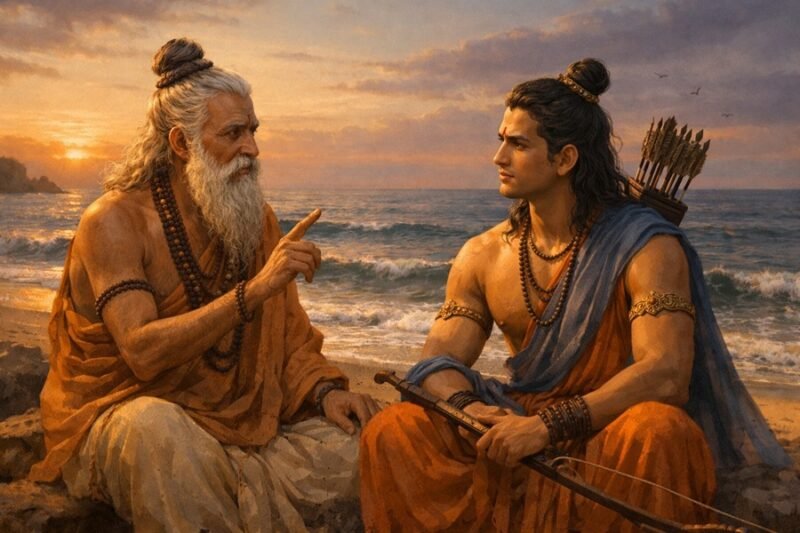
Confronted by the seemingly impassable ocean, Lord Ram sought a solution. According to the legend, he asked his brother Lakshmana for guidance on how to cross the waters and defeat the formidable Ravana. Lakshmana suggested visiting the nearby hermitage of the great sage Bakadalbhya, who possessed divine foresight.
The Sage’s Advice
Sage Bakadalbhya advised Lord Ram to observe the Vijaya Ekadashi Vrat. He explained that this specific fast, when performed with strict devotion, would grant him the power to conquer the ocean and ensure victory in the upcoming war.
Following the sage’s instructions, Lord Ram and his army observed the fast on the Ekadashi of the dark fortnight of Phalguna. The legend states that the spiritual merit generated from this collective act of devotion pacified the ocean god, allowing them to build the Ram Setu (bridge) and ultimately defeat Ravana.
Rituals and Observance
Observing the Vijaya Ekadashi fast involves specific rituals designed to purify the mind and body.
- Sankalp (Vow): Devotees take a vow early in the morning to fast until the next day (Dwadashi).
- Worship: An altar is set up for Lord Vishnu. Offerings include fruits, flowers, incense, and a sacred water vessel (Kalash).
- Jagran: Many devotees stay awake through the night, singing bhajans and chanting Vishnu mantras.
- Parana: The fast is broken on the next day, Dwadashi, during the specific auspicious time.
Quick Fact Sheet: Vijaya Ekadashi
| Feature | Details |
| Primary Deity | Lord Vishnu |
| Core Purpose | Victory over enemies and obstacles |
| Associated Epic | Ramayana (Lord Ram & Sage Bakadalbhya) |
| Key Offering | Tulsi leaves, fruits, yellow flowers |
| Fasting Type | Nirjala (no water) or Phalahar (fruits/milk) |
Conclusion
The Vijaya Ekadashi Vrat Katha serves as a powerful reminder of the role of faith and discipline in overcoming insurmountable odds. Just as the fast is believed to have aided Lord Ram in his quest, modern devotees observe it with the hope of clearing the hurdles in their own lives. Whether for spiritual cleansing or success in worldly matters, the tradition remains a vital part of the Hindu calendar.
What is the biggest personal obstacle you are hoping to overcome this year?
Read Also: How Many States in India are There in 2026? A Complete Guide
