

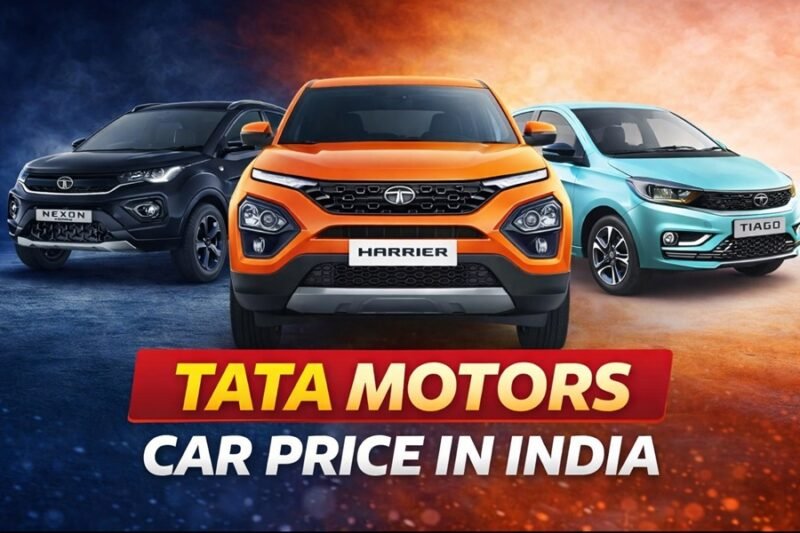
There’s a specific feeling you get when you shut the door of a modern Tata car. It’s that reassuring thud—heavy, solid, and safe. Ten years ago, if you told me I’d be comparing a Tata SUV to a Hyundai or a Kia on fit and finish, I would have laughed. Today, it’s the standard comparison test we run every week.
Tata Motors has done something remarkable. They haven’t just updated their portfolio; they’ve completely overhauled the perception of Indian manufacturing. But with this shift upmarket comes a shift in pricing. The days of the dirt-cheap Indica are long gone. In 2026, Tata is playing in the premium mass market, and their price list reflects that ambition.
If you are looking to park a new Tata in your driveway this year, you’re probably overwhelmed by the sheer number of variants—Petrol, Diesel, CNG, and EV. I’ve spent the last decade testing these machines on everything from the smooth tarmac of the Yamuna Expressway to the broken backroads of rural Maharashtra. Here is my breakdown of the current lineup and what you need to pay to get behind the wheel.
The Hatchbacks: Tiago and Altroz
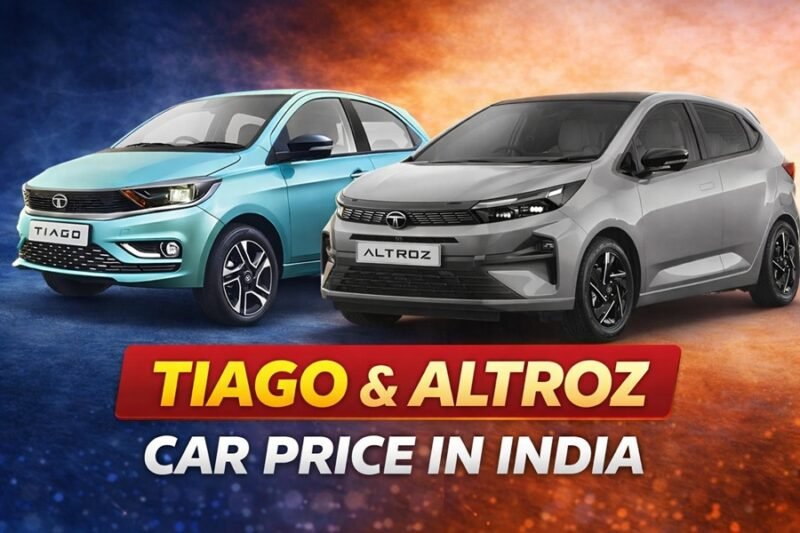
The entry-level segment is where Tata builds its volume, and honestly, it’s where they offer some of the best value for money in the country.
Tata Tiago (2026 Model Year)
The Tiago remains the gateway into the Tata family. It’s compact, zippy, and surprisingly spacious for its footprint.
- Price Range: ₹5.65 Lakh – ₹8.90 Lakh (Ex-Showroom)
- Engine Options: 1.2L Revotron Petrol, iCNG, EV
- Who is it for? First-time car buyers and college students. If you need a second car for strictly city runabouts, the Tiago EV is arguably the most sensible car on Indian roads right now.
The Drive:
I recently took the Tiago CNG AMT through Bangalore’s notorious rush hour. The creep function is well-tuned, and unlike older AMTs, the head-nod effect is minimal unless you are flooring the throttle. The suspension absorbs potholes better than the Maruti Celerio, feeling less crashy over bad roads.
Tata Altroz
The “Gold Standard” hatchback is aging, but it’s aging gracefully. It’s the only hatchback in its class that feels built like a tank.
- Price Range: ₹6.65 Lakh – ₹11.35 Lakh (Ex-Showroom)
- Engine Options: 1.2L NA Petrol, 1.2L Turbo Petrol, 1.5L Diesel, iCNG
- Who is it for? Highway commuters who don’t want a sedan. The diesel variant is a gem for long-distance milers—a dying breed in 2026, but Tata has kept it alive.
The Drive:
Steering feel is the highlight here. It’s weighty at high speeds, giving you immense confidence around corners. However, the 1.2L naturally aspirated petrol engine still feels lethargic. If you can stretch your budget, get the i-Turbo or the Racer edition.
The SUVs: Punch, Nexon, Harrier, and Safari
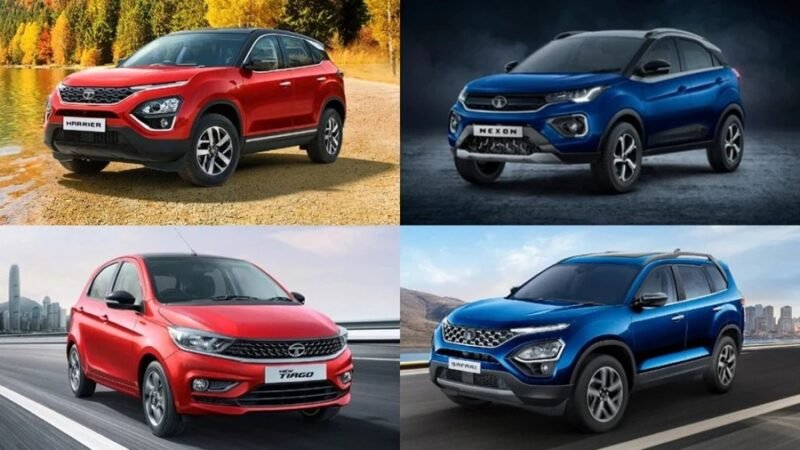
This is the meat of the matter. Tata’s dominance comes from its SUV lineup, which seems to have a vehicle for every budget.
Tata Punch
The micro-SUV that killed the entry-level hatchback segment. It looks like a baby Harrier and drives like a tall Tiago.
- Price Range: ₹6.13 Lakh – ₹10.20 Lakh (Ex-Showroom)
- Engine Options: 1.2L Petrol, iCNG, EV
- Who is it for? People who want the “SUV feel” (high seating position) but have a tight parking spot.
The Drive:
The view from the driver’s seat is commanding. You see the bonnet edges, which helps in tight traffic. However, the engine noise creeps into the cabin past 80 km/h. It’s not a quiet cruiser, but it handles bad roads with authority.
Tata Nexon (2026 Facelift)
The king of the hill. The Nexon is often the best-selling SUV in India for a reason. The 2026 iteration has further refined the futuristic design language introduced a couple of years ago.
- Price Range: ₹8.15 Lakh – ₹15.80 Lakh (Ex-Showroom)
- Engine Options: 1.2L Turbo Petrol, 1.5L Diesel, EV (Medium & Long Range)
- Who is it for? The small family. It’s the perfect all-rounder. Safe (5-star BNCAP), tech-loaded, and spacious enough for four adults and a child.
The Drive:
I’ve driven the Nexon EV Long Range extensively. The torque is addictive. In Sport mode, it pushes you back in your seat. The suspension is slightly stiff at low speeds, but that translates to excellent stability on the highway. The new DCT gearbox in the petrol version has ironed out the jerkiness of the old AMT, making city driving much smoother.
Tata Harrier & Safari
These are the flagships. Built on the OMEGArc platform derived from Land Rover, these beasts offer a ride quality that segments above struggle to match.
- Harrier Price: ₹15.49 Lakh – ₹26.44 Lakh (Ex-Showroom)
- Safari Price: ₹16.19 Lakh – ₹27.34 Lakh (Ex-Showroom)
- Engine Options: 2.0L Kryotec Diesel, 1.5L TGDi Petrol (New for 2026), EV
- Who is it for? Road trippers and big families. If you drive 500+ km on a weekend, the Harrier feels unshakeable. The Safari is for those who need that third row occasionally.
The Drive:
The hydraulic steering setup on these cars used to be heavy at parking speeds. In the 2026 updates, the electric power steering (EPS) makes maneuvering these large SUVs in mall parking lots a breeze. The isolation from the outside world is fantastic. You glide over expansions joints that would send a shudder through a Hyundai Creta.
Related Post: 7 Seater Car Under 10 Lakh: Top Picks for Big Families on a Budget
Tata Motors Car Price List (2026 Estimate Snapshot)
To make things easier, here is a quick reference table for the current ex-showroom prices across the major cities. Note that on-road prices will vary significantly based on state taxes.
Technical Specifications & Performance
When you look past the glossy brochures, here is what these engines actually deliver in real-world conditions.
The Tata Ownership Experience: The Good and The Bad
Buying a Tata is an emotional decision as much as a practical one. But let’s strip away the emotion and look at the facts.
The Pros
- Safety is Non-Negotiable: Tata democratized safety in India. Even their cheapest car feels sturdier than competitors costing twice as much. Knowing your family is in a 5-star rated shell is a peace of mind you can’t put a price tag on.
- Ride Quality: Tata engineers understand Indian roads better than anyone else. Their suspension tuning hits the sweet spot between comfort and handling. They eat potholes for breakfast.
- Design: Under Martin Uhlarik’s guidance, Tata cars look stunning. The Curvv and the new Harrier EV turn heads everywhere they go.
The Cons
- After-Sales Service: This remains the Achilles’ heel. While improved, the service experience is inconsistent. In my 15 years, I’ve had stellar service at one center and absolute nightmares at another. It’s a lottery.
- Fit and Finish Niggles: While the dashboards look premium, you will still find panel gaps or a rattle developing after 10,000 km. Quality control has improved, but it’s not yet at Hyundai or Toyota levels.
- Infotainment Glitches: The software on the touchscreens can be buggy. I’ve had screens freeze on me in the middle of navigation during test drives.
Should You Buy a Tata in 2026?
The answer depends on what you value most.
If you prioritize peace of mind regarding safety and want a car that can handle rough roads without breaking a sweat, Tata is the brand for you. Their robust build quality is perfect for the chaotic Indian driving environment.
However, if you are a stickler for perfect panel gaps and want a white-glove service experience every time you visit the workshop, you might want to look at the Japanese or Korean alternatives.
Personally? I’d put my money on the Nexon EV. It represents the best of modern Tata—fast, safe, tech-loaded, and future-proof.
FAQs
1. Is Tata Motors increasing car prices in 2026?
Yes, typically car manufacturers hike prices in January and April. Given the rising input costs and new emission norms, you can expect a 2-3% hike across the Tata portfolio compared to 2025 prices.
2. Which is the cheapest Tata car price with a sunroof?
Currently, the Tata Altroz XM+ S and the Tata Punch Accomplished Dazzle are the most affordable entry points if a sunroof is a priority for you.
3. Does the Tata Harrier finally have a petrol engine?
Yes, the 2026 lineup includes the new 1.5L TGDi petrol engine. It offers punchy performance but is slightly thirstier than the diesel counterpart.
4. Is the Tata Tiago EV good for highway driving?
The Tiago EV is primarily a city car. While it can do 80-100 km/h comfortably, the range drops significantly at high speeds. For regular highway usage, the Nexon EV or Curvv EV is a better bet.
5. What is the waiting period for Tata cars right now?
It varies by model. The Punch and Nexon generally have a waiting period of 4 to 8 weeks, while the Harrier and Safari are often available within 3 to 5 weeks depending on the color and variant.
Read Also: Land Rover Defender Car Price in India: The Ultimate Luxury SUV Guide (2026)
