

Buying a car is a major decision for most Indian families. You want reliable performance, modern features, and—most importantly—a price that fits your budget. If you’re considering a Tata vehicle, you’re looking at one of India’s most trusted automotive brands. But with so many models and variants available, understanding the actual cost can feel overwhelming.
This guide breaks down the Tata car price for 2026, covering everything from entry-level hatchbacks to premium SUVs. Whether you’re a first-time buyer or upgrading your current vehicle, you’ll find clear information on pricing, on-road costs, and what to expect from Tata’s newest launches.
By the end of this article, you’ll know exactly which Tata car suits your needs and budget—without any surprises at the dealership.
Understanding Tata Car Pricing in India
When you walk into a showroom, the sticker price is just the beginning. The Tata car on road price includes several additional costs that can significantly increase what you actually pay. Here’s what goes into the final amount:
Ex-Showroom Price: This is the base cost of the vehicle before any taxes or fees. It’s the manufacturer’s price and varies slightly between cities.
Road Tax (RTO Charges): Each state in India has different road tax rates, typically ranging from 8% to 14% of the vehicle’s ex-showroom price. Metropolitan cities often charge higher rates.
Insurance: Third-party insurance is mandatory by law, and most buyers opt for comprehensive coverage. Insurance costs depend on the vehicle’s value, engine capacity, and your location.
Registration Fees: This covers the cost of registering your vehicle with the local RTO and getting your number plates issued.
Optional Add-ons: Extended warranties, accessories, and service packages can add to your total cost but aren’t always necessary upfront.
Understanding these components helps you compare the Tata all car price more accurately and avoid sticker shock when you’re ready to sign the papers.
Tata Cars Price List 2026: Model-by-Model Breakdown
Tata Motors offers a diverse lineup that caters to different buyer segments. Here’s a comprehensive look at the Tata cars price list for 2026, organized by category.
Entry-Level & Compact Cars
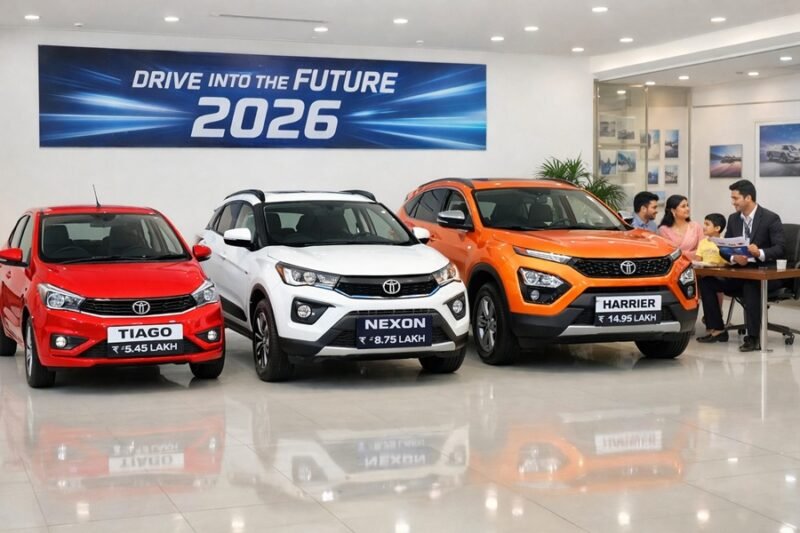
Tata Tiago: Starting at approximately ₹5.65 lakh (ex-showroom), the Tiago remains one of India’s most affordable hatchbacks. It offers a peppy petrol engine, decent fuel efficiency, and a surprisingly spacious cabin for its size. The CNG variant provides even better running costs for city commuters.
Tata Altroz: Priced from around ₹6.60 lakh (ex-showroom), the Altroz is a premium hatchback with a 5-star Global NCAP safety rating. It competes directly with the Maruti Baleno and Hyundai i20, offering superior build quality and safety features at a competitive price point.
Tata Tigor: This compact sedan starts at approximately ₹6.30 lakh (ex-showroom). It’s essentially a sedan version of the Tiago, offering extra boot space without a significant price increase. The Tigor EV variant has also gained popularity among eco-conscious buyers.
Mid-Size Sedans & SUVs
Tata Nexon: One of Tata’s bestsellers, the Nexon starts at around ₹8.15 lakh (ex-showroom). This compact SUV offers both petrol and diesel options, along with an electric variant. Its bold design, feature-rich interior, and strong safety credentials make it a favorite among young families.
Tata Harrier: Starting at approximately ₹15.49 lakh (ex-showroom), the Harrier is a premium 5-seater SUV with commanding road presence. It comes with a 2.0-liter diesel engine and offers both manual and automatic transmission options.
Tata Safari: Positioned as Tata’s flagship SUV, the Safari starts at around ₹16.19 lakh (ex-showroom). This 6/7-seater variant of the Harrier offers three-row seating, making it ideal for larger families who need extra passenger capacity.
Electric & Future-Ready Models
Tata Nexon EV: Beginning at approximately ₹14.49 lakh (ex-showroom), the Nexon EV is India’s best-selling electric SUV. With a claimed range of up to 453 km on a single charge (for the Max variant), it addresses range anxiety while offering lower running costs compared to petrol vehicles.
Tata Punch EV: The newest addition to Tata’s EV lineup, the Punch EV is expected to start around ₹10.99 lakh (ex-showroom). This micro-SUV brings electric mobility to a more affordable price segment.
Tata Curvv EV: Launching in 2026, this electric coupe-SUV represents Tata’s push into premium electric segments. Expected pricing starts around ₹18 lakh (ex-showroom), positioning it as a stylish alternative to conventional SUVs.
Calculating the Real On-Road Cost
The Tata car on road price varies significantly based on where you live. Let’s break down a real example using the Tata Nexon, one of India’s most popular compact SUVs.
Base Scenario (Delhi):
- Ex-showroom price: ₹8.15 lakh
- Road tax (10%): ₹81,500
- Insurance (comprehensive): ₹35,000
- Registration & other charges: ₹15,000
- Approximate on-road price: ₹9.30 lakh
Same Car (Mumbai):
- Ex-showroom price: ₹8.15 lakh
- Road tax (13%): ₹1.06 lakh
- Insurance (comprehensive): ₹37,000
- Registration & other charges: ₹18,000
- Approximate on-road price: ₹9.76 lakh
The difference of nearly ₹46,000 shows why it’s crucial to check the on-road price specific to your city before finalizing your purchase. Some buyers even consider registering their vehicles in nearby states with lower road tax rates, though this comes with its own complications.
What’s New in Tata’s 2026 Lineup?
Tata Motors has been consistently refreshing its portfolio. Here’s what’s generating buzz for the Tata new car price in 2026:
Tata Altroz Racer: A performance-oriented variant of the Altroz with a more powerful turbocharged engine. Expected to start around ₹9.49 lakh (ex-showroom), it targets driving enthusiasts who want something beyond standard hatchbacks.
Tata Harrier & Safari Facelift: Both SUVs are receiving mid-cycle updates with refreshed exteriors, updated interiors, and enhanced ADAS (Advanced Driver Assistance Systems) features. These updates may result in a price increase of ₹50,000-₹1 lakh across variants.
Tata Sierra EV: The revival of an iconic nameplate in electric form. This lifestyle SUV is expected to launch in late 2026 with an estimated starting price of ₹25 lakh (ex-showroom), targeting buyers seeking distinctive design with electric performance.
Avinya Concept Production Model: Tata’s upcoming premium electric vehicle, built on a dedicated EV platform. While exact pricing remains under wraps, industry experts predict a starting price around ₹30 lakh (ex-showroom) when it launches.
Smart Buying Tips for Tata Cars
Getting the best value goes beyond just comparing the Tata all car price. Here are practical strategies to maximize your investment:
Visit Multiple Dealerships: Prices can vary slightly between authorized dealers. Some offer better exchange bonuses or accessory packages. Don’t hesitate to negotiate—dealers often have flexibility, especially toward month-end or during festival seasons.
Consider the Total Cost of Ownership: A diesel variant might cost ₹1.5-2 lakh more upfront than petrol, but if you drive over 2,000 km monthly, the fuel savings can recover that difference within three years. Similarly, EVs have higher initial costs but drastically lower running expenses.
Check for Corporate Discounts: Many companies have tie-ups with Tata Motors offering employee discounts ranging from ₹10,000 to ₹50,000. Even if your employer doesn’t have a formal arrangement, it’s worth asking.
Time Your Purchase: Festival seasons (Diwali, Dussehra) and financial year-end (March) typically see better offers as dealers push to meet sales targets. You might get additional benefits like free accessories, extended warranties, or lower interest rates on loans.
Test Drive Multiple Variants: Don’t just test the base model. Try the top variant to understand what features you truly value. Sometimes, spending ₹50,000 more for a mid-spec variant offers significantly better value than the base model.
Financing Your Tata Car
Most Indian buyers finance their vehicle purchase. Here’s what you need to know about auto loans:
Down Payment: Banks typically require 10-20% down payment. A larger down payment reduces your EMI and total interest outgo. For a ₹10 lakh car with a 20% down payment and 9% interest over 5 years, your EMI would be approximately ₹16,600.
Interest Rates: Current auto loan rates range from 8.5% to 12% depending on your credit score, income stability, and the lending institution. Public sector banks often offer slightly lower rates than NBFCs, but the latter may have faster processing.
Loan Tenure: While 7-year loans are available, they significantly increase your total interest payment. A 5-year tenure strikes a better balance between manageable EMIs and reasonable interest costs.
Pre-Approved Offers: Check if your bank offers pre-approved auto loans. These come with negotiated rates and faster disbursement, giving you better negotiating power at the dealership.
Maintenance and Running Costs
The Tata car price is just the starting point. Understanding ongoing costs helps you choose the right model:
Service Intervals: Tata recommends servicing every 10,000 km or 12 months. Annual maintenance for models like the Nexon typically costs ₹8,000-₹12,000 for the first three years, increasing slightly as the vehicle ages.
Fuel Efficiency: The Tiago delivers around 19-23 km/l, while SUVs like the Nexon offer 14-17 km/l. Electric variants eliminate fuel costs entirely, with charging costs roughly one-fourth of equivalent petrol expenses.
Insurance Renewal: Comprehensive insurance premiums decrease by about 5% annually thanks to depreciation, though third-party rates are government-mandated and increase yearly.
Resale Value: Tata vehicles have improved their resale value significantly over the past few years, though they still lag slightly behind Maruti and Hyundai. The Nexon, in particular, holds its value well in the used car market.
Comparing Tata Cars with Competitors
When evaluating the Tata cars price list, it’s helpful to see how they stack up:
Tata Punch vs. Hyundai Exter: Both start around ₹6-7 lakh, but the Punch offers better safety ratings and a more robust build. The Exter counters with slightly better fuel efficiency and a more established service network.
Tata Nexon vs. Maruti Brezza: The Nexon starts about ₹1 lakh higher but includes more standard safety features and a turbocharged petrol option. The Brezza offers superior fuel economy and lower maintenance costs.
Tata Harrier vs. Jeep Compass: The Compass starts around ₹19 lakh, making it ₹3.5 lakh more expensive than the Harrier. While the Jeep badge carries prestige, the Harrier offers comparable features and better value for money.
Frequently Asked Questions
What is the starting price of Tata cars in India for 2026?
The most affordable Tata car is the Tiago, with prices starting at approximately ₹5.65 lakh (ex-showroom). However, the on-road price will be higher depending on your state’s taxes and registration fees. Entry-level variants provide essential features, while top-spec models add convenience and safety equipment.
How much does a Tata Nexon cost on-road in major cities?
The Tata Nexon’s on-road price varies by location. In Delhi, expect to pay around ₹9.30-₹15.50 lakh depending on the variant. Mumbai prices range from ₹9.76-₹16 lakh, while Bangalore falls between ₹9.50-₹15.80 lakh. Always check with your local dealer for the most accurate pricing specific to your city.
Are Tata electric cars more expensive than petrol variants?
Yes, EVs have higher upfront costs. The Nexon EV starts at ₹14.49 lakh compared to the petrol Nexon’s ₹8.15 lakh—a difference of about ₹6.34 lakh. However, lower running costs (electricity vs. petrol) and reduced maintenance can recover this difference over 5-7 years for drivers covering 15,000+ km annually.
Which Tata car offers the best value for money in 2026?
The Tata Nexon consistently ranks as the best value proposition. It balances price, features, safety, and practicality better than most competitors. For budget-conscious buyers, the Tiago remains unbeatable in the entry-level segment. Those seeking luxury should consider the Harrier for its combination of size, features, and pricing.
Making Your Final Decision
Choosing the right Tata car isn’t just about finding the lowest Tata car price—it’s about matching a vehicle to your specific needs and budget. A young professional commuting 20 km daily has different requirements than a family planning weekend road trips.
Start by defining your priorities. Do you need maximum space, cutting-edge technology, or the lowest running costs? Once you’ve identified your must-haves, narrow down to two or three models and test drive them thoroughly. Pay attention not just to performance, but to comfort, visibility, and ease of use for features you’ll access daily.
Don’t rush the decision. Take time to research, compare offers across dealerships, and read owner reviews online. The few hours you invest now can save you from years of regret.
Tata Motors has transformed its brand image over the past decade, delivering vehicles that compete confidently with international standards while remaining accessible to Indian buyers. Whether you choose a practical hatchback or a feature-loaded SUV, you’re getting a vehicle backed by one of India’s most respected industrial houses.
Ready to take the next step? Visit your nearest Tata dealership, experience the models firsthand, and find the perfect car that fits both your dreams and your budget.
