

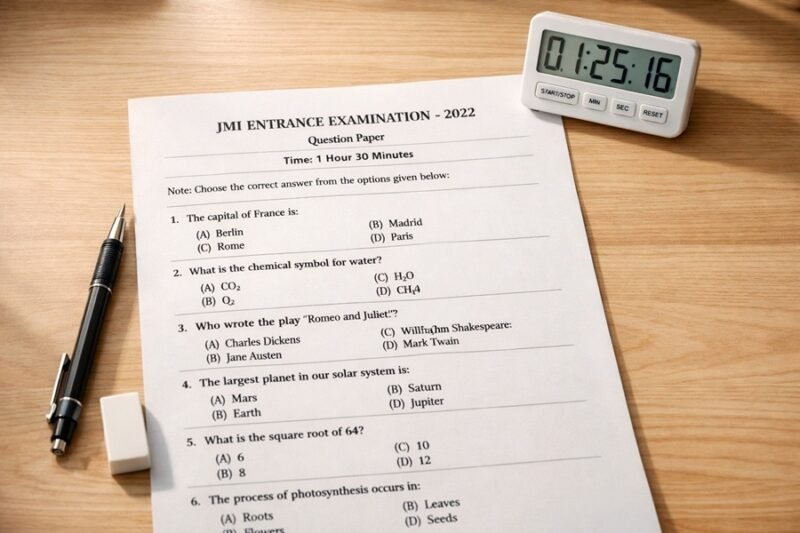
Preparing for the Jamia Millia Islamia how to write answers in board exams Class 11 can feel overwhelming. You’re juggling board exam preparation while trying to understand what the entrance test will actually look like. The uncertainty can create unnecessary stress during an already demanding time.
One of the most effective ways to build confidence and familiarity with the exam pattern is by practicing with JMI previous year entrance papers for 11th class. These authentic papers give you direct insight into the question format, difficulty level, and topics that receive the most emphasis. They transform abstract preparation into concrete practice.
This guide will walk you through everything you need to know about accessing and using these papers effectively. Whether you’re a student aiming for admission, a parent supporting your child’s preparation, or a teacher creating practice materials, you’ll find actionable strategies here.
A Note on Older Papers: While some available papers may be from 2018 or earlier years, they remain excellent resources for mastering core concepts and understanding the fundamental structure of question framing. The foundational syllabus stays consistent, making these papers valuable practice tools regardless of their year.
Why JMI Previous Year Papers Matter for Your Preparation
Practice papers aren’t just about solving questions. They serve multiple strategic purposes in your preparation journey.
Understanding the Exam Blueprint
Previous year papers reveal patterns in how questions are structured. You’ll notice which topics appear frequently, how marks are distributed across sections, and whether certain question types dominate. This knowledge helps you prioritize your study time wisely.
Building Time Management Skills
Attempting full-length papers under timed conditions trains you to pace yourself during the actual exam. You’ll learn which sections you can complete quickly and which require more careful attention. This practice prevents the common mistake of spending too much time on difficult questions at the expense of easier ones.
Identifying Knowledge Gaps
When you work through previous papers, your mistakes become learning opportunities. Each incorrect answer points to a concept you need to revisit. This targeted approach to revision is far more efficient than randomly reviewing your entire syllabus.
Reducing Exam Anxiety
Familiarity breeds confidence. The more you practice with authentic papers, the less intimidating the actual exam becomes. You walk into the examination hall knowing exactly what to expect, which significantly reduces test-day nervousness.
How to Access JMI Previous Year Entrance Papers
Finding authentic practice materials requires knowing where to look. Here are reliable sources for obtaining JMI previous year entrance papers for 11th class.
Official JMI Website
The university occasionally publishes sample papers or previous year questions on their official admissions portal. Check the prospectus section and downloadable resources area. While they may not always have the most recent papers available, the materials posted are guaranteed to be authentic.
Educational Resource Websites
Several educational platforms compile entrance exam papers from various institutions. Websites like Examrace, Shiksha, and Careers360 often feature JMI papers in their question bank sections. Verify that the papers are specifically for Class 11 entrance, as some sites may mix different exam levels.
School Libraries and Coaching Centers
If you’re enrolled in a coaching program or have access to a well-stocked school library, check their reference sections. Many coaching institutes maintain physical or digital archives of previous year papers for major entrance exams, including JMI.
Student Communities and Forums
Online student forums and social media groups dedicated to JMI admissions can be helpful. Current students or recent alumni sometimes share papers they used during their preparation. Always cross-verify the authenticity of papers obtained through these channels.
Smart Strategies for Using Previous Year Papers
Simply collecting papers won’t improve your scores. How you use them determines their effectiveness in your preparation.
Start After Completing Your Syllabus
Attempting previous year papers before finishing your basic preparation can be discouraging. First, complete at least 70-80% of your syllabus through textbooks and regular study. Then introduce papers as a testing and refinement tool.
Simulate Real Exam Conditions
Set aside uninterrupted time matching the actual exam duration. Sit at a proper desk, keep only permitted materials nearby, and use a timer. This simulation builds the stamina and focus required for the real test.
Analyze Every Attempt Thoroughly
After completing a paper, don’t just check your score. Spend time understanding why you got questions wrong. Was it a conceptual gap? A silly mistake? Poor time allocation? Document these patterns to avoid repeating them.
Create a Mistake Log
Maintain a notebook where you write down questions you answered incorrectly, along with the correct solution and explanation. Review this log regularly in the weeks before your exam. It becomes a personalized guide to your weak areas.
Repeat Papers Strategically
Attempting the same paper multiple times can be valuable, but space out your attempts. Try a paper once, study the concepts you struggled with, then reattempt it after two or three weeks. You’ll notice improved performance and better retention.
What the JMI Class 11 Entrance Exam Typically Covers
While specific syllabi can vary slightly year to year, the entrance exam generally tests knowledge across several core areas.
Science Stream:
The paper typically includes sections on Physics, Chemistry, Biology, Mathematics, and English. Questions test both theoretical understanding and application-based problem-solving. Expect questions at the CBSE Class 10 difficulty level, with some stretching into early Class 11 concepts.
Commerce and Humanities Streams:
For these streams, the emphasis shifts to subjects like English, General Knowledge, Logical Reasoning, and stream-specific subjects. The format remains similar—multiple choice questions with varying difficulty levels.
Common Elements:
Regardless of stream, expect questions testing general awareness, basic mathematics, and English language proficiency. These sections appear consistently across years, making previous papers excellent practice for these components.
Common Mistakes to Avoid During Practice
Students often undermine their preparation by approaching practice papers incorrectly. Avoid these pitfalls.
Treating Practice as Casual Review
If you attempt papers while checking your phone, taking breaks, or looking up answers, you’re not getting authentic practice. Discipline during mock tests translates to better performance during the actual exam.
Ignoring Time Limits
Some students focus only on getting answers right, regardless of how long it takes. This approach fails to build the speed you’ll need. Always practice under timed conditions.
Skipping the Analysis Phase
Checking your score and moving on wastes the learning opportunity. The real value comes from analyzing your performance, understanding mistakes, and adjusting your study plan accordingly.
Relying Only on Old Papers
While previous year papers are valuable, they shouldn’t be your only study material. Balance them with textbook learning, concept revision, and new practice questions to ensure comprehensive preparation.
Building a Complete Preparation Strategy
Previous year papers are one component of effective preparation. Integrate them into a broader strategy for best results.
Dedicate the first phase of your preparation to thorough concept building through your textbooks and school notes. Ensure you understand fundamentals before moving to practice.
In the middle phase, start attempting individual topic-wise questions alongside previous papers. This combination reinforces learning while building exam familiarity.
Reserve the final weeks before your exam for full-length paper attempts under strict time limits. This period is about fine-tuning your performance and building confidence.
Throughout your preparation, maintain consistent study hours, take regular breaks, and prioritize sleep. Physical and mental wellness directly impact your ability to retain information and perform under pressure.
FAQs – JMI previous year entrance papers for 11th class
Q: Where can I download authentic JMI previous year papers for Class 11 entrance?
A: The most reliable source is the official JMI website under their admissions section. Educational platforms like Careers360 and Shiksha also compile these papers. Always verify the paper’s authenticity and ensure it’s for the correct class level.
Q: Are papers from 2018 still useful for current exam preparation?
A: Absolutely. While exam patterns may evolve slightly, the core concepts tested remain consistent. Older papers are excellent for understanding question types, difficulty levels, and fundamental topic coverage. They provide valuable practice even if they’re not from the most recent year.
Q: How many previous year papers should I practice before the exam?
A: Aim to complete at least 5-7 full-length papers under timed conditions. Beyond that, the number depends on your available time and current preparation level. Quality of practice matters more than quantity—thoroughly analyzing three papers is better than casually attempting ten.
Q: What if I score poorly on my first practice paper?
A: Poor initial scores are completely normal and expected. The first paper helps identify your current level and areas needing improvement. Use it as a diagnostic tool rather than a measure of your potential. Focus on steady improvement across subsequent attempts rather than comparing yourself to any benchmark.
Your Next Steps Toward Admission Success
Accessing and practicing with JMI previous year entrance papers for 11th class gives you a significant advantage in your preparation journey. These papers transform abstract exam anxiety into concrete, manageable practice.
Start by securing authentic papers from reliable sources. Then integrate them systematically into your study schedule, always maintaining exam-like conditions during practice. Analyze each attempt thoroughly, learn from your mistakes, and track your improvement over time.
Remember that previous year papers work best when combined with thorough concept learning, regular revision, and a balanced lifestyle. They’re a powerful tool, but not a shortcut replacing fundamental preparation.
Download your first paper today. Set aside two hours this week to attempt it under timed conditions. That single practice session will give you more clarity about your preparation needs than hours of passive studying.
Your admission to JMI starts with the choices you make today. Make practicing with previous year papers one of those smart choices.
Read Also: FA2 Question Paper Class 10 2018: Your Complete Practice Guide
