

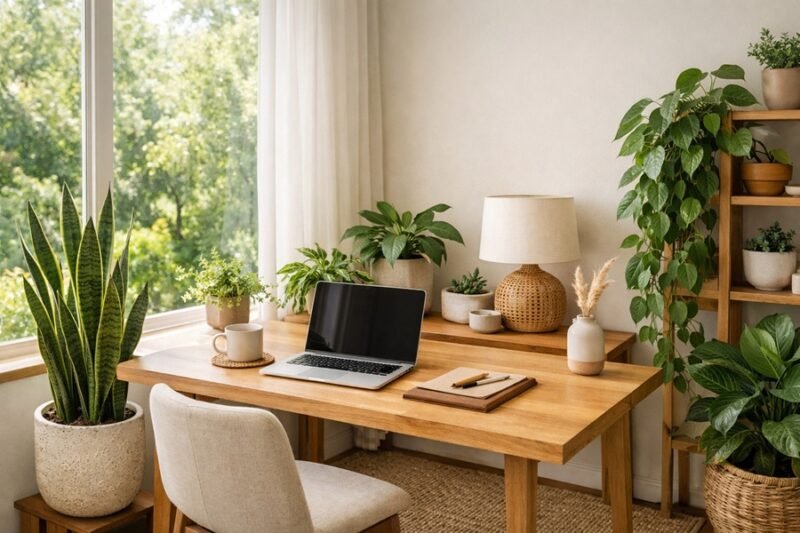
Working from home offers incredible flexibility, but let’s be honest—staring at a screen for eight hours a day within four plain walls can feel stifling. If you find yourself feeling drained, uninspired, or stressed by midday, your environment might be the culprit. This is where biophilic home office design steps in. It’s more than just a trend; it’s a design philosophy that connects us back to nature to improve well-being and productivity.
By integrating natural elements into your workspace, you can transform a sterile desk setup into a mood-boosting home office that fosters creativity and calm. Whether you are a freelancer, a remote worker, or a new homeowner looking to carve out a personal sanctuary, bringing the outdoors in is the perfect way to refresh your workday. Let’s explore how you can build a workspace that breathes life into your daily routine.
What is Biophilic Home Office Design?
Before we dive into the practical tips, it helps to understand the core concept. Biophilia literally means “love of life.” In the context of interior design, it refers to creating spaces that strengthen the human connection to nature. It isn’t just about putting a potted plant on your desk (though that’s a great start!). It involves a holistic approach using light, materials, textures, and even air quality to mimic the natural world.
Research consistently shows that biophilic environments can reduce stress, improve cognitive function, and enhance creativity. For a WFH setup, this translates to better focus and a happier state of mind.
Maximize Natural Light Home Decor
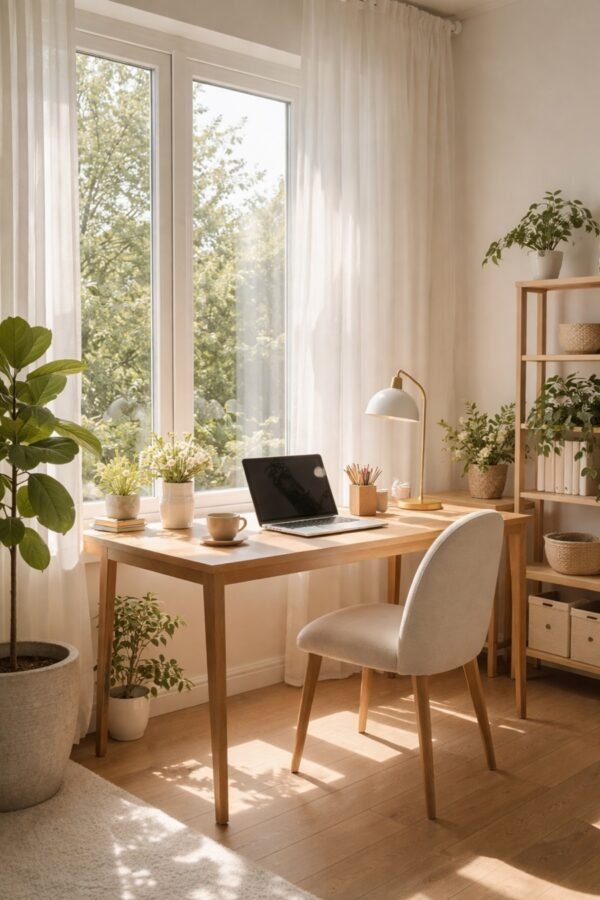
The most critical element of any nature-inspired space is light. Natural light regulates our circadian rhythms, affecting our sleep-wake cycles and overall energy levels. A dark, artificially lit room can lead to eye strain and fatigue, whereas sunlight boosts serotonin—the hormone associated with boosting mood and helping a person feel calm and focused.
Position Your Desk Wisely
If possible, place your desk perpendicular to a window. This allows you to enjoy the view and the sunlight without the harsh glare on your computer screen. If your room lacks large windows, consider using mirrors to bounce available light around the room, making the space feel airier and brighter.
Layer Your Lighting
For those gloomy days or late-night sessions, artificial lighting should mimic natural daylight. Opt for full-spectrum LED bulbs that replicate the color temperature of sunlight. Avoid harsh, cold fluorescent lights that can induce headaches. Soft, warm lamps can add a cozy, “hygge” feel to your evenings, keeping the vibe relaxing yet productive.
Choose the Right Indoor Plants for Office Spaces
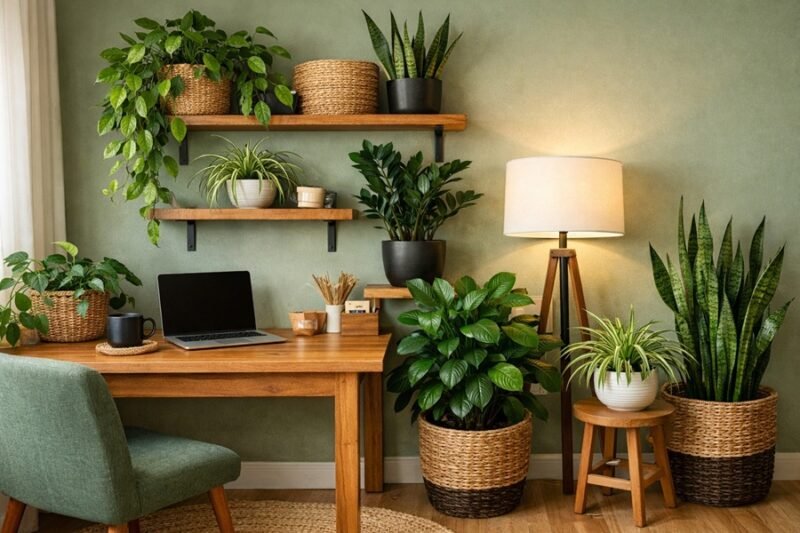
Greenery is the heartbeat of biophilic design. Plants do double duty: they add visual calmness and improve air quality by filtering out common household toxins. But not everyone has a green thumb, and that’s okay. The key is choosing the right plants for your light conditions and maintenance level.
Low-Maintenance Powerhouses
If you tend to forget watering, start with these resilient options:
- Snake Plant (Sansevieria): thrives in almost any light and requires very little water.
- ZZ Plant: incredibly hardy and has beautiful, waxy green leaves.
- Pothos: a trailing plant that grows quickly and adds a lush, jungle vibe to shelves.
Air-Purifying Stars
To maximize the health benefits, consider:
- Peace Lily: known for removing pollutants like ammonia and benzene.
- Spider Plant: easy to propagate and great for hanging baskets.
- Rubber Plant: adds height and drama with its large, glossy leaves.
Don’t just place one pot in the corner. Cluster plants together to create small “microclimates” that increase humidity and visual impact. Vertical gardens or wall-mounted planters are excellent WFH setup ideas for smaller rooms where floor space is premium.
Incorporate Natural Materials and Sustainable Furniture
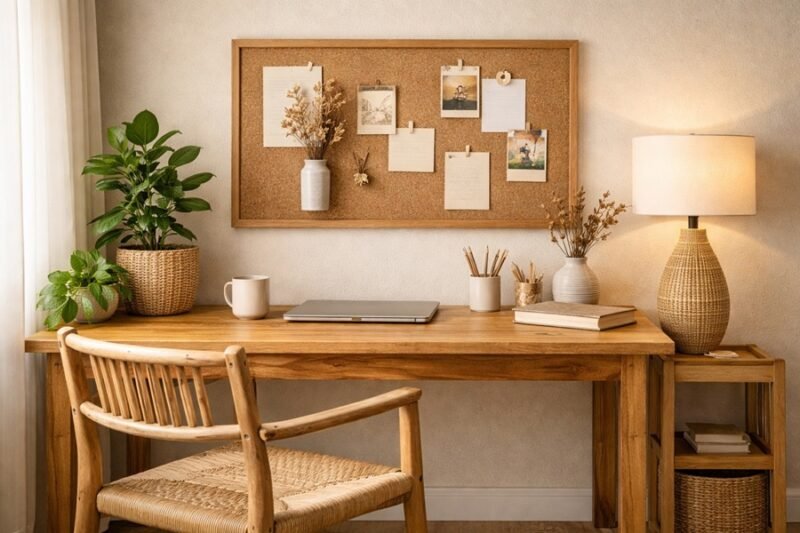
Plastic and synthetic materials often feel cold and impersonal. To truly ground your space, introduce organic textures and sustainable furniture. Wood, bamboo, cork, stone, and rattan bring warmth and tactile variety to your office.
The Power of Wood
A solid wood desk is an investment that pays off in aesthetics and durability. The grain patterns in wood are naturally soothing to the human eye. If a new desk isn’t in the budget, try wooden accessories like a monitor stand, a pen holder, or shelving.
Sustainable Choices
When shopping for furniture, look for pieces made from reclaimed wood, recycled metal, or bamboo. Bamboo is a fantastic, fast-growing renewable resource that adds a modern yet earthy touch. Choosing sustainable furniture isn’t just good for the planet; it adds a layer of intentionality and story to your workspace.
embrace Organic Shapes and Earthy Color Palettes
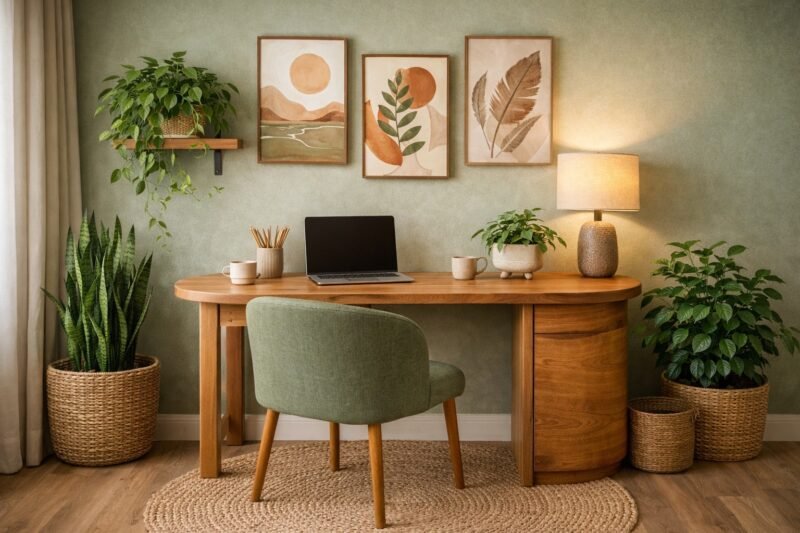
Nature rarely moves in straight lines. The outdoors is full of curves, soft edges, and irregular patterns. You can mimic this in your biophilic home office design to break up the rigidity of tech equipment.
Soften the Edges
Choose a round rug, an oval desk, or artwork with fluid lines. These organic shapes are subconsciously more relaxing than sharp, angular forms.
Color Psychology
Your color palette should reflect the outdoors.
- Greens and Blues: These cool tones are famously calming and aid concentration.
- Earth Tones: Beiges, terracottas, and warm browns provide a grounding backdrop.
- Neutrals: Soft whites and greys mimic stone and clouds, keeping the space bright and open.
Avoid overly saturated, neon colors which can be overstimulating. Instead, let your plants provide the vibrant pops of color against a soothing, natural backdrop.
Engage All the Senses
Biophilic design is a multisensory experience. A truly mood-boosting home office appeals to more than just sight.
Sound
If you live in a noisy city, mask the traffic with nature sounds. A small desktop water fountain can provide a soothing trickle that masks distracting background noise. Alternatively, play a soundscape of rain, forest birds, or ocean waves to help you enter a flow state.
Scent
Scent is powerfully linked to memory and emotion. Use an essential oil diffuser with natural scents like:
- Peppermint or Lemon: for energy and focus.
- Lavender or Eucalyptus: for stress relief and calm.
- Pine or Cedarwood: to bring the forest indoors.
Touch
Texture matters. A wool throw on your chair, a jute rug underfoot, or a smooth stone paperweight adds sensory richness that keeps you grounded in the physical world, balancing out the digital nature of your work.
Bringing It All Together
Creating a biophilic home office doesn’t require a complete renovation or a massive budget. It starts with small, intentional changes. Move your desk near the window. Buy that Snake Plant. Swap your plastic pen cup for a ceramic one.
By prioritizing natural light home decor, sustainable materials, and living elements, you create a workspace that doesn’t just function—it flourishes. You’re not just designing an office; you’re designing a lifestyle that values mental health, creativity, and a deep connection to the world around you.
Remember, aapka ghar aapki personality ka aaina hai (your home is a mirror of your personality)—so let it reflect a life that is fresh, lively, and deeply connected to nature.
Frequently Asked Questions
What are the main benefits of biophilic design in a workspace?
Biophilic design has been shown to reduce stress, lower blood pressure, and improve cognitive function. In a workspace, this leads to increased productivity, better focus, and enhanced creativity. It creates a mood-boosting home office environment that makes working long hours feel less draining.
Can I create a biophilic office if I have no windows?
Yes! While natural light is ideal, you can mimic it with full-spectrum daylight LED bulbs. Focus on other elements like adding low-light indoor plants for office spaces (like ZZ plants or Snake plants), using nature-inspired artwork, playing nature soundscapes, and incorporating natural textures like wood and stone.
Is biophilic design expensive?
Not necessarily. You can start small. Propagating plants from friends is free. Rearranging furniture to face a window costs nothing. You can also find affordable decor made from natural materials like wicker baskets or clay pots. Sustainable furniture can be an investment, but many budget-friendly options exist, especially if you look for second-hand wooden pieces.
How many plants do I need for a biophilic effect?
There is no magic number, but studies suggest that even a few plants can make a difference. Start with one or two large statement plants or a small cluster of three on your desk. The goal is to have greenery within your peripheral vision while you work to reduce visual fatigue.
Must Read: How to Invest in Luxury Watches: A Beginner’s Guide to Timeless Assets
