

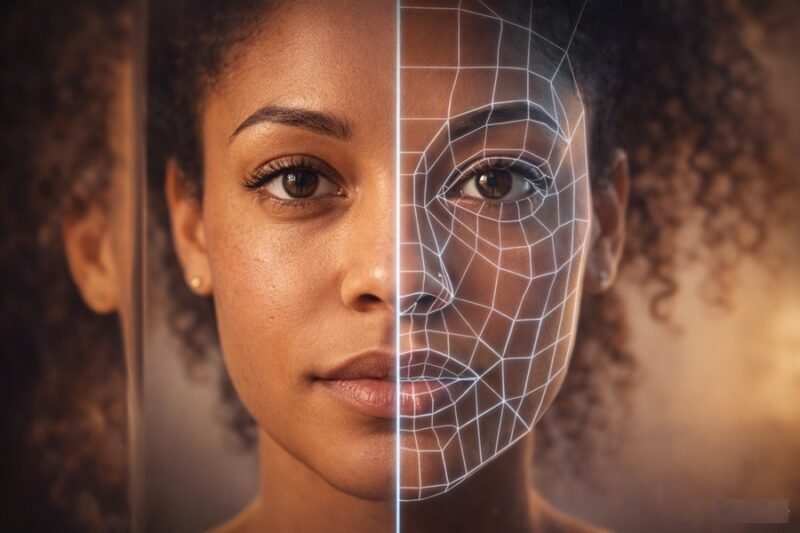
We’ve all been there. You look in the mirror and think you look fine. Then, you see a photo of yourself—or worse, you try out that inverted filter on TikTok—and suddenly, you feel like you’re looking at a stranger. One eyebrow seems higher than the other, your smile pulls to the left, or your jawline looks sharper on one side.
This is the reality of having an asymmetrical face.
First, take a deep breath. It is incredibly common to have features that don’t perfectly mirror each other. In fact, perfect symmetry is biologically rare. However, understanding the facial asymmetry meaning goes beyond just aesthetics; it dives into genetics, habits, and dental health.
Whether you are curious about why this happens or you are actively looking for solutions on how to fix an asymmetrical face, this guide covers everything from medical causes to makeup tricks and the truth about face yoga.
What is Facial Asymmetry? The Real Meaning
When we talk about facial asymmetry, we are referring to the condition where one side of the face does not perfectly match the other. If you were to draw a line down the center of your face, from your forehead to your chin, an asymmetrical face would show differences in the size, shape, or position of features on either side.
While the beauty industry often sells the idea that symmetry equals perfection, biology tells a different story. Most people have some degree of asymmetry. It’s often what gives a face character and charm. However, the degree of unevenness varies.
Normal vs. Pronounced Asymmetry
- Normal Asymmetry: Slight differences that are usually only noticeable to the person looking in the mirror (you). For example, one eye might be slightly smaller, or your hair parting makes one side of your forehead look different.
- Pronounced Asymmetry: Noticeable differences that may be caused by skeletal issues, muscle weakness, or past injuries. This type of uneven face shape is often what drives people to seek corrective treatments.
Why Do I Have an Uneven Face Shape? (The Causes)
You didn’t wake up like this by accident. Several factors contribute to how your features align. Understanding the root cause is the first step in determining if—and how—you should treat it.
1. Genetics (The Blueprint)
Just as you inherit your eye color and height, you inherit your facial structure. If your parents have asymmetrical features, likely, you will too. Genetic factors determine the development of your jawbone and soft tissues. In many cases, a slightly crooked smile or uneven eyes are simply part of your DNA.
2. Aging and Soft Tissue Changes
As we age, our bones stop growing, but our cartilage continues to change. Additionally, soft tissues (fat and muscle) shift. We lose volume in our face as collagen production slows down. Interestingly, this volume loss rarely happens evenly. You might lose more fat pad volume in one cheek than the other, leading to a drooping effect that creates new asymmetry later in life.
3. Dental Factors and Jaw Alignment
Your teeth play a massive role in the structure of your lower face. An overbite, underbite, or crossbite can force your jaw to sit unevenly. Even missing teeth can cause the jawbone to shrink over time (resorption), leading to a sunken appearance on one side. This is why many people ask, “can braces fix asymmetrical face issues?”—because the foundation of the face is often in the mouth.
4. Lifestyle Habits
Believe it or not, your daily habits might be slowly reshaping your face.
- Sleeping Position: Sleeping on your stomach or the same side every night presses your face against the pillow for hours. Over years, this can deepen nasolabial folds and flatten the cheek on that specific side.
- Chewing: Do you always chew food on the left side? This can overdevelop the masseter muscles (jaw muscles) on that side, making the jaw look wider and stronger there, while the other side looks slimmer.
- Posture: “Tech neck” and poor posture can cause alignment issues in the neck and spine, which eventually translate to the facial muscles appearing uneven.
5. Injury and Medical Conditions
Trauma to the face, such as a broken nose or jaw during childhood, can affect how bones develop. Certain medical conditions also cause sudden asymmetry:
- Bell’s Palsy: A sudden weakness in facial muscles causing one side to droop.
- Stroke: Can cause facial paralysis.
- Torticollis: A twisting of the neck that creates an uneven head tilt and facial development.
If you experience sudden, new facial asymmetry, you should consult a doctor immediately to rule out stroke or other serious conditions.
How to Fix Asymmetrical Face: Non-Invasive Methods
If your asymmetry is mild to moderate and related to soft tissue (muscle and fat) rather than bone structure, there are several non-invasive ways to improve facial balance.
Makeup and Contouring
The fastest way to correct an uneven face shape is through visual illusion.
- Eyebrows: If one brow is higher, avoid thin shapes. Fill them in to match the top of the lower brow and the bottom of the higher brow to create alignment.
- Lips: Use a lip liner to slightly overline the thinner side of your lip to match the fuller side.
- Contouring: Use a cool-toned contour powder to shade the wider side of your jaw or forehead. This creates a shadow that makes that area appear smaller, bringing it into balance with the narrower side.
Hairstyles
Your hair frames your face and can either highlight or hide asymmetry.
- Side Parts: A deep side part is excellent for breaking up the vertical line of the face, making asymmetry less obvious to the human eye.
- Layers and Waves: Stick straight hair acts like a ruler, highlighting unevenness. Soft waves and face-framing layers distract the eye and soften angular differences.
Facial Massage and Gua Sha
Lymphatic drainage and facial massage can reduce puffiness. Sometimes, one side of the face appears larger simply because it is retaining more fluid (often the side you sleep on). Regular Gua Sha practice can help drain this fluid and relax tight muscles that might be pulling your features out of alignment.
Do Asymmetrical Face Exercises Actually Work?
You have likely seen viral videos of “Face Yoga” promising to realign your face. But is there science behind asymmetrical face exercises?
The answer is yes and no.
You cannot change your bone structure with exercise. No amount of cheek lifting will reshape your jawbone. However, you can build and tone facial muscles. If your asymmetry is caused by muscle weakness or uneven muscle use (like chewing on one side), targeted exercises can help.
Try these simple exercises:
- The Wink: Isolate the weaker side of your face. Partially wink that eye and hold for a second without scrunching the rest of your face. Repeat 50 times.
- The Half Smile: Cover the “stronger” side of your mouth. Practice smiling only with the weaker side, lifting the corner of the mouth as high as possible. This helps build the zygomatic muscles.
- Cheek Puff: Puff air into the cheek that looks flatter or less developed. Hold for 5 seconds and release. Repeat 10 times to stretch and activate the muscles.
Note: Consistency is key. Results from face yoga are subtle and take months of daily practice.
Medical and Dental Solutions for Asymmetry
When makeup and exercises aren’t enough, or if the asymmetry is skeletal, professional intervention is the next step.
Injectables: Botox and Fillers
This is the most popular method for correcting asymmetry because it is customizable.
- Botox (Neurotoxins): If one eyebrow sits higher because the muscle is hyperactive, a small unit of Botox can relax it, dropping it to match the other. It can also slim down an overdeveloped masseter muscle caused by uneven chewing.
- Dermal Fillers: If one cheek is flatter or the chin is slightly crooked, fillers can add volume to the recessed areas, creating instant visual balance.
Can Braces Fix Asymmetrical Face Issues?
This is one of the most frequently asked questions. Can braces fix asymmetrical face shapes?
Yes, but with caveats.
Braces and Invisalign are highly effective if the asymmetry is dental. If your jaw looks crooked because your teeth are misaligned (causing you to shift your jaw to close your mouth), straightening the teeth will allow the jaw to settle into its proper, central position.
However, if the jawbone itself is different lengths on the left and right (skeletal asymmetry), braces alone will not fix the facial structure. In such cases, braces are often combined with orthognathic (jaw) surgery.
Orthognathic Surgery
For severe cases where asymmetry impacts chewing, speaking, or breathing, jaw surgery is the corrective option. This involves a surgeon cutting and repositioning the upper or lower jaw to achieve perfect alignment. This is a major procedure with a long recovery time and is usually a last resort.
The Psychology of Symmetry: Embracing the “Flaws”
Before you book a consultation or spend hours in the mirror, it is vital to touch on the psychological aspect. We are biologically wired to find symmetry attractive because, evolutionarily, it signaled health. However, in the modern world, unique features are often what make a face memorable and beautiful.
Look at celebrities like Ryan Gosling, Bradley Cooper, and Kat Graham. They all have noticeable facial asymmetry, yet they are widely considered some of the most attractive people in the world. Their “flaws” give their faces personality.
Sometimes, the fixation on asymmetry stems from Body Dysmorphic Disorder (BDD). If you find that your concern about your facial symmetry is interfering with your daily life or causing severe distress, speaking to a therapist is just as important as speaking to a dermatologist.
Conclusion
Having an asymmetrical face is not a defect; it is a variation of normal human anatomy. While social media filters might try to convince us that mathematical perfection is the goal, real beauty often lies in the quirks.
If your asymmetry is causing functional issues or significant insecurity, there are plenty of options available. You can start small with asymmetrical face exercises and styling changes, or consult professionals to ask, “can braces fix asymmetrical face issues for me?”
The best approach? Determine the cause, weigh the severity, and choose the path that makes you feel most confident. Whether you choose to correct it or embrace it, your face is uniquely yours.
Ready to explore your options? We recommend scheduling a consultation with a board-certified dermatologist or orthodontist to get a personalized assessment of your facial structure.
FAQs
1. Is it normal to have an asymmetrical face?
Yes, it is completely normal. Almost no one has a perfectly symmetrical face. Genetics, sleeping habits, and natural aging all contribute to asymmetry. Unless it is sudden or severe, it is usually just a cosmetic characteristic rather than a medical issue.
2. Can sleeping on one side cause facial asymmetry?
Yes, consistent pressure on one side of your face from sleeping can eventually cause changes. It may lead to a flattening of the cheek or deeper wrinkles (sleep lines) on that side. Sleeping on your back is the best way to prevent this type of asymmetry.
3. At what age does facial asymmetry become noticeable?
Asymmetry can appear at any age. Some people are born with it (congenital), while others develop it during puberty as the jaw grows. It can also become more pronounced in later adulthood as skin loses elasticity and soft tissue volume shifts unevenly.
4. Can chewing gum help fix an asymmetrical jaw?
If your asymmetry is caused by underused muscles on one side, chewing gum evenly on both sides or focusing on the weaker side might help tone the muscle slightly. However, excessive chewing can lead to TMJ (jaw joint) issues, so it should be done with caution.
