

It’s one of the great ironies of our technological age. We are racing toward a future where artificial intelligence can generate hyper-realistic images, write persuasive essays, and even mimic the voices of our loved ones. Yet, the more perfect these simulations become, the more we find ourselves craving the imperfect, the messy, and the unmistakably human.
This is the AI Authenticity Paradox. As the volume of synthetic media explodes, the premium on genuine, human-made content skyrockets. We are entering an era where perfection is cheap, but truth is expensive. This shift presents a complex landscape for creators, journalists, and brand strategists who must navigate the fine line between innovation and deception.
The Rapid Rise of AI-Generated Content
Just a few years ago, AI-generated art was often surreal and glitchy—fascinating, but clearly machine-made. Today, the landscape has transformed entirely. Tools like Midjourney, DALL-E, and advanced language models have democratized high-quality content creation. A solo entrepreneur can now generate marketing copy, logo designs, and promotional videos in an afternoon, tasks that once required a team of specialists.
This explosion of capability is not limited to text and static images. We are seeing AI permeate video production, music composition, and even code generation. The barriers to entry for creating polished media have essentially vanished. While this democratization is empowering, it floods our digital feeds with content that, while technically impressive, often lacks a heartbeat. The sheer volume of this material forces us to ask: amidst the noise of the algorithm, where is the human signal?
Understanding Authenticity in AI-Generated Media
The core of the paradox lies in how we value what we consume. Historically, we judged media by its quality—how well was it written, how beautiful was the painting, how convincing was the acting? But now, quality is easily manufactured. A machine can write a grammatically perfect poem in seconds. Does that make the poem valuable?
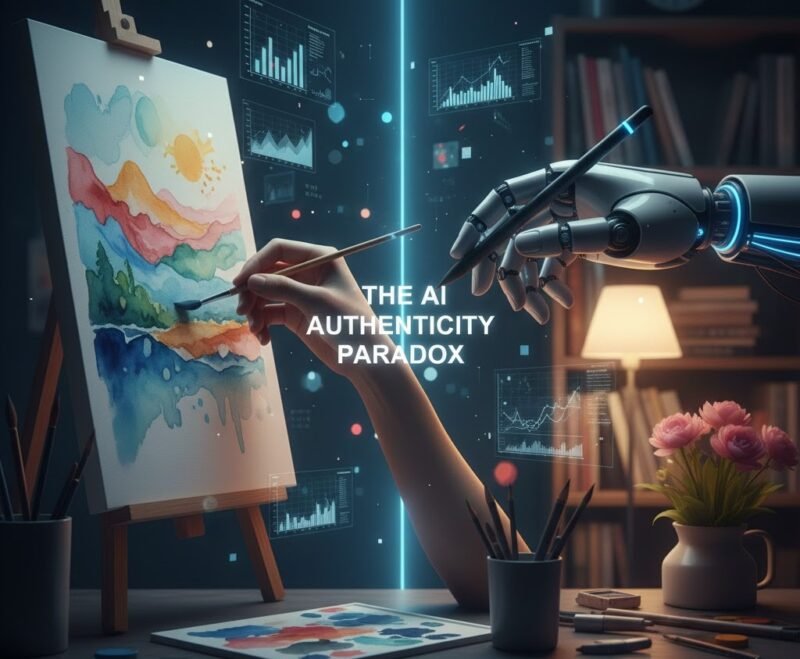
For many, the answer is no. We value art and storytelling not just for the final product, but for the human intent and experience behind it. We care about the struggle, the unique perspective, and the emotional labor that went into the creation. As authenticity in AI-generated media becomes harder to discern, consumers are becoming more skeptical.
There is a growing debate here: should authenticity even matter? If an AI writes a song that moves you to tears, is the emotion any less real because a human didn’t pen the lyrics? Philosophically, this challenges our definitions of creativity. But practically, in the marketplace of ideas, provenance still holds power. We want to know who is speaking to us, and why.
Ethical Concerns: Deepfake Ethics 2026
The darker side of this technological leap is the potential for misuse. The term “deepfake” has moved from a niche technical concept to a mainstream concern. We are already witnessing instances where political figures are impersonated to spread misinformation, or celebrities’ likenesses are used without consent.
Looking ahead, deepfake ethics 2026 will likely be a central theme in global policy discussions. The ability to manipulate reality erodes trust in public institutions and media. When we can no longer trust our eyes and ears, the fabric of shared reality begins to fray.
Real-world examples are already cautionary tales. From fraudulent CEO voice scams costing companies millions to synthetic avatars spreading propaganda on social media, the weaponization of AI is not a future threat—it is a current reality. This necessitates a strong ethical framework for creators. It’s not just about what AI can do, but what it should do.
The Enduring Value of Original Storytelling
In a sea of synthetic perfection, the rough edges of human experience stand out. The value of original storytelling is arguably higher than ever because it offers something AI cannot: lived experience.
AI works by predicting patterns based on existing data. It is, by definition, derivative. It cannot experience heartbreak, joy, or the peculiar nostalgia of a childhood memory. It can simulate descriptions of these things, but it cannot source them from a soul.
Consider the resurgence of personal essays, live-streamed unedited video, and behind-the-scenes content. Audiences are flocking to these formats because they offer intimacy. Brands that tell stories rooted in real customer experiences or founders’ struggles resonate more deeply than those relying on polished, generic marketing speak. A case study might be the enduring popularity of podcasts—a medium that relies heavily on the nuance of the human voice and the unpredictability of conversation. This raw, unfiltered connection is the antithesis of the polished, predictable output of an algorithm.
Digital Provenance in Media and Blockchain Solutions
So, how do we verify what is real? This question brings us to the concept of digital provenance in media. We need systems that act as a digital chain of custody, allowing consumers to trace a piece of content back to its origin.
This is where blockchain technology finds a compelling use case beyond cryptocurrency. By creating immutable ledgers for digital assets, creators can cryptographically sign their work. This “digital watermark” proves that a specific video or article was created by a specific person at a specific time and has not been altered.
Initiatives like the Content Authenticity Initiative (CAI) are already working on open standards for this. The goal is to have “nutrition labels” for digital content, showing the user exactly where an image came from and what edits were made. As these technologies mature, checking the provenance of a viral video might become as second nature as checking the ingredients on a food package.
Future Trends: Human-Made vs AI Content
As we look toward synthetic media trends, the future likely isn’t a binary choice between human and machine, but a complex hybrid. We will see distinct tiers of content emerge.
On one end, there will be “utility content”—stock photos, basic instructional text, weather reports—that will be almost entirely AI-generated. On the other end, there will be “premium human content”—opinion pieces, investigative journalism, handcrafted art—which will command a higher price and deeper engagement.
The tension of human-made vs AI content will define the economics of the creator industry. We may see platforms labeling AI content explicitly, or algorithms prioritizing content with verified human provenance. Creators will likely use AI as a tool for brainstorming or drafting, but the final “human polish” will become the hallmark of quality.
Strategies for Content Creators and Brands
Navigating this new world requires a strategic pivot. If you are a creator or a brand, you cannot simply out-generate the machines. You must out-human them.
- Transparency is Key: Be open about your use of AI. If you used ChatGPT to outline a blog post or Midjourney to create a header image, say so. Audiences appreciate honesty and it builds trust.
- Double Down on Personality: AI can mimic style, but it struggles with personality. Lean into your unique voice, your specific sense of humor, and your personal anecdotes.
- Focus on Community: Machines don’t build communities; people do. Engage with your audience in the comments, host live Q&As, and foster genuine connections that go beyond content consumption.
- Value-Driven Content: ensure your content stands for something. AI doesn’t have values or morals; your brand does. Let those values shine through in the stories you tell.
Moving Forward with Authenticity
The AI Authenticity Paradox is a wake-up call. It reminds us that while technology can scale content, it cannot scale connection. As we wade deeper into the age of synthetic media, the most valuable asset anyone can possess is their own humanity.
We don’t need to reject AI to preserve authenticity. We simply need to be mindful of how we use it. By championing transparency, investing in digital provenance, and valuing the unique spark of human creativity, we can ensure that the future of media remains not just intelligent, but meaningful.
Read Also: Gen Alpha Digital Culture 2026
