

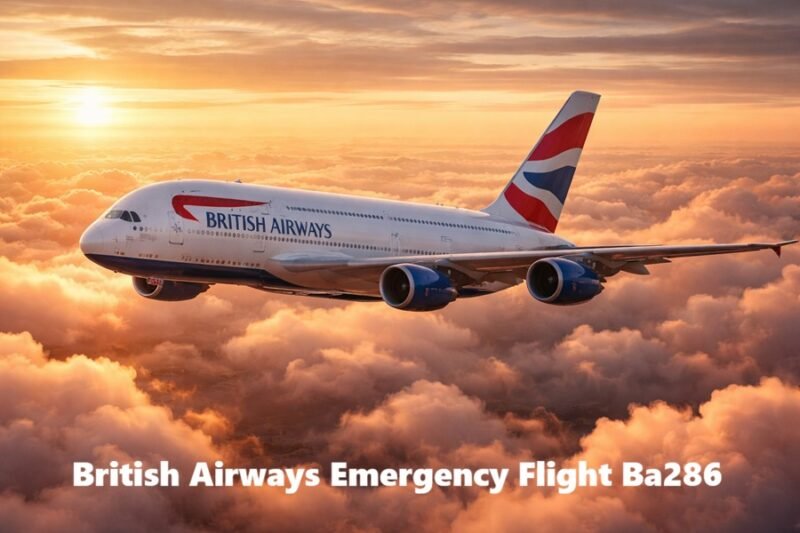
Air travel remains statistically the safest form of transport, yet emergency incidents still capture the public’s attention and concern. Recently, British Airways flight BA286 became the focus of news reports following an unscheduled diversion. For travelers frequenting the UK–US routes, specifically San Francisco to London Heathrow, understanding the nature of these incidents is crucial for peace of mind.
This article provides a comprehensive overview of the BA286 emergency incident, examining the timeline of events, the crew’s response, and what passengers can learn about airline safety protocols during such medical or technical emergencies.
What Happened on British Airways Flight BA286?
Flight BA286 is a scheduled passenger service operated by British Airways from San Francisco International Airport (SFO) to London Heathrow (LHR). The specific incident that garnered significant media attention occurred when an Airbus A380 operating this route was forced to divert to Vancouver International Airport (YVR).
Reports confirm that the flight crew declared an emergency after members of the cabin crew and passengers became unwell. The decision to divert was made out of an abundance of caution, prioritizing the safety and well-being of everyone on board.
Timeline of the Diversion
While specific details can vary depending on the exact date of the incident being researched (as flight numbers are reused daily), the most notable emergency involving BA286 followed this general sequence:
- Departure: The aircraft departed San Francisco on schedule for its transatlantic journey.
- Incident Declaration: While in Canadian airspace, the pilot communicated with air traffic control regarding a medical situation involving crew members.
- Diversion: The flight was diverted to Vancouver (YVR), landing safely without further incident.
- Emergency Response: Upon landing, emergency services met the aircraft to assess and treat the affected crew and passengers.
Causes of In-Flight Emergencies and Diversions
When a flight like BA286 diverts, speculation often arises regarding the cause. In aviation, diversions are typically categorized into three main areas: technical faults, medical emergencies, or security concerns.
Medical Emergencies vs. Fume Events
In the case of the widely reported BA286 diversion to Vancouver, initial reports suggested a potential “fume event” or smoke in the cabin, though airlines and investigators are often thorough before confirming such details. Symptoms reported by crew and passengers—such as dizziness or nausea—can sometimes be attributed to air quality issues, but can also stem from other medical factors.
It is important to note that British Airways, like all major carriers, operates under strict safety management systems. If a pilot suspects any risk to health, diverting to the nearest suitable airport is the standard and correct procedure.
Technical Reliability of the Airbus A380
The aircraft operating this route, the Airbus A380, is a double-deck, wide-body jet known for its engineering and safety. Technical faults that lead to emergency landings are rare but handled with rigorous checklists. Modern aircraft are equipped with redundant systems, meaning that even if one system fails, backup systems ensure the plane can continue to fly or land safely.
Passenger Safety and Airline Protocols
For frequent international travelers, witnessing an emergency diversion can be unsettling. However, the safe landing of British Airways emergency flight BA286 demonstrates the effectiveness of aviation safety protocols.
Crew Training and Response
Cabin crew are trained not just in service, but primarily in safety and emergency medicine. Their ability to identify unwell colleagues or passengers and communicate effectively with the flight deck is vital. In this incident, the crew’s swift action allowed the pilots to make an informed decision to land early.
What Happens After an Emergency Landing?
Once on the ground, the priority shifts to passenger care.
- Medical Assessment: Paramedics board the aircraft or meet passengers at the gate.
- Logistics: The airline’s operations team works to rebook passengers on alternative flights or provide accommodation if an overnight stay is required.
- Investigation: Aviation authorities and the airline’s engineering teams inspect the aircraft to determine the root cause before it is released back into service.
Practical Tips for Travelers During Flight Disruptions
If you find yourself on a flight that is diverting, staying calm and informed is key.
- Listen to Instructions: The cabin crew will provide specific instructions. Follow them immediately.
- Keep Your Seatbelt Fastened: During a rapid descent or diversion, turbulence can occur.
- Update Family: Once permitted to use mobile devices on the ground, inform waiting family members of the change in arrival time.
- Know Your Rights: In cases of significant delays or cancellations, passengers are often entitled to compensation or care under regulations like UK261 or EU261.
Conclusion: Safety Remains the Priority
The diversion of British Airways flight BA286 serves as a reminder of the complexities of modern aviation. While disruptions are inconvenient, the successful handling of the situation highlights the industry’s uncompromising commitment to safety. Pilots and crew are trained to handle the unexpected, ensuring that whether it is a medical issue or a technical alert, the aircraft lands safely.
For future passengers on the UK–India or Transatlantic routes, trust in these rigorous standards remains well-placed. The system worked exactly as designed: a potential risk was identified, and immediate action was taken to protect life.
Frequently Asked Questions (FAQs)
What caused the British Airways flight BA286 emergency?
The specific widely-reported diversion of BA286 to Vancouver was caused by members of the cabin crew and passengers becoming unwell mid-flight. While initially suspected to be related to air quality or fumes, the diversion was primarily a medical precaution.
Is the Airbus A380 safe to fly after such incidents?
Yes, the Airbus A380 is one of the safest aircraft in the sky. Aircraft involved in emergencies undergo rigorous engineering inspections and must be cleared by safety regulators before returning to passenger service.
Can I claim compensation if my flight is diverted for a medical emergency?
Generally, medical emergencies are considered “extraordinary circumstances” outside the airline’s control, which often exempts them from paying cash compensation under UK261/EU261 rules. However, the airline is still responsible for providing care, such as food, drink, and accommodation during the delay.
How often do flights divert due to medical emergencies?
Flight diversions are relatively rare compared to the total volume of daily flights. Medical diversions occur when a passenger or crew member’s condition is serious enough that they cannot wait until the scheduled destination to receive hospital treatment.
