

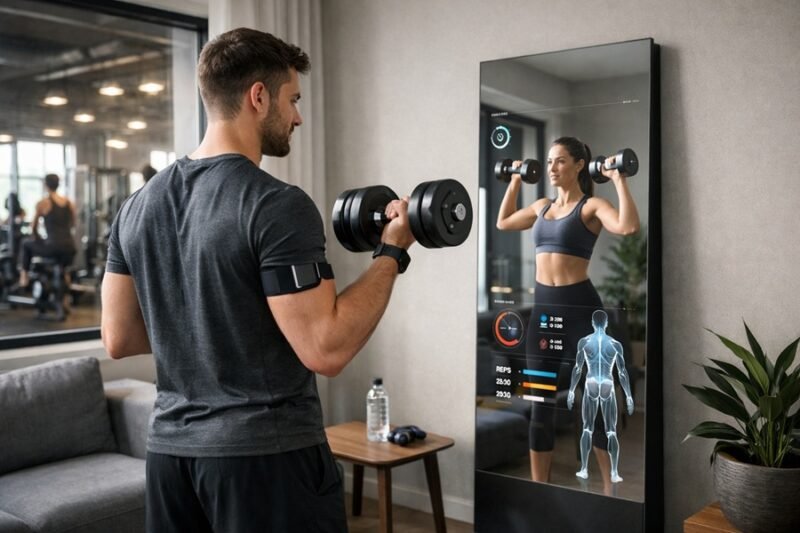
The 5 P.M. rush to the squat rack is becoming a thing of the past. For decades, fitness meant one thing: physically going to a brick-and-mortar location, scanning a card, and waiting your turn for the leg press. But as technology infiltrates every corner of our lives, the fitness industry is undergoing a seismic shift. We are entering the era of the hybrid fitness model—a flexible, tech-enabled approach that combines the best of digital convenience with physical exertion.
This isn’t just about streaming a yoga video on your laptop anymore. It’s an ecosystem where artificial intelligence, virtual reality, and smart hardware converge to create a hyper-personalized wellness experience. The “gym-only” culture isn’t necessarily dead, but it has certainly evolved. For busy urban workers and tech-savvy millennials, the new standard is a seamless blend of home workouts, outdoor sessions, and data-driven guidance that fits into a schedule, rather than dictating it.
The Allure of AI Personal Trainers
One of the biggest drivers of this shift is the explosion of artificial intelligence in wellness. Personalized AI workout plans are no longer futuristic concepts; they are the baseline expectation for modern fitness apps.
These digital coaches analyze your biometrics, sleep data, and past performance to curate routines that adapt in real-time. If your wearable device detects poor sleep quality, your AI trainer might swap a high-intensity interval session for a recovery flow. This level of granularity used to require an expensive human expert. Now, it’s available for a monthly subscription that costs less than a single drop-in class.
Beyond personalization, the cost-effectiveness is undeniable. Hiring a human coach for three sessions a week can cost upwards of $1,000 a month. AI alternatives provide comparable programming for a fraction of the price. Plus, the accessibility is unmatched—an AI trainer is available at 4 A.M. in your living room or 10 P.M. in a hotel gym, eliminating the logistical friction that often kills motivation.
AI Personal Trainer vs Human Coach: A Detailed Comparison
“Anyone who has trained seriously knows the difference between a program that looks good on paper and one that feels right on a bad day.”
While algorithms are powerful, they aren’t perfect. The debate of the AI personal trainer vs human coach is central to the hybrid fitness revolution. Each has distinct strengths, and the “winner” depends entirely on your specific needs.
The Case for AI:
- Data Processing: An AI can instantly process thousands of data points—heart rate variability, rep speed, total volume—to optimize progressive overload without manual calculation.
- Convenience: There is no scheduling conflict with an algorithm.
- Objectivity: AI doesn’t have bad days. It provides consistent, logic-based feedback every single time.
The Case for Humans:
- Empathy and Accountability: A robot can notify you that you missed a workout, but it can’t understand why. A human coach provides emotional support and holds you accountable in a way that software cannot mimic.
- Form Correction: While computer vision is improving, a human eye is still superior for correcting subtle form breakdowns in complex lifts, reducing injury risk.
- Adaptability to Chaos: If you walk into the gym with a minor injury or high stress, a human can intuitively adjust the vibe of the session instantly.
For many, the hybrid model solves this debate by combining both. You might use an AI app for your daily programming and check in with a human coach once a month for form reviews and high-level strategy.
Smart Gym Equipment and Virtual Reality Workouts
The hardware in our homes is getting smarter, bridging the gap between the living room and the boutique studio. Smart gym equipment reviews consistently highlight devices like Tonal or Peloton, which use digital weights and resistance that adjust automatically. These aren’t just coat racks in the making; they provide haptic feedback and performance tracking that rival professional facilities.
Simultaneously, we are seeing a surge in virtual reality workouts at home. VR headsets like the Meta Quest have moved fitness from a chore to an immersive experience. You can box in a neon-lit arena, practice Tai Chi on a virtual mountaintop, or slash through targets to the beat of a soundtrack.
This technology enhances hybrid fitness by removing the boredom of solitary home workouts. It creates a sense of presence and environment that a standard video stream lacks, making it easier to stick to a routine without leaving the house.
Gamified Fitness Trends: Turning Workouts into Play
If VR transports you to a new world, gamification changes how you interact with it. Gamified fitness trends are leveraging our psychological desire for achievement and competition.
Apps like Strava have long used leaderboards to drive performance, but newer platforms are taking it further. “Move-to-earn” models reward users with cryptocurrency or digital assets for hitting step counts. RPG-style fitness apps let you level up a character by completing squats or running miles.
By turning exercise into a game, these platforms hack the brain’s reward system. The dopamine hit comes not just from the endorphins of the workout, but from the digital achievement. For the Gen Z demographic, this integration of gaming mechanics and physical health feels natural, blurring the lines between screen time and active time.
The Future: Hybrid Fitness Models in 2026 and Beyond
Looking ahead, the hybrid fitness model 2026 and beyond will likely be characterized by invisibility and integration. We won’t just “go to the gym” or “do a workout”; fitness will be woven into the fabric of our daily existence through ambient technology.
We can expect:
- Predictive Health: AI that doesn’t just react to your data but predicts illness or fatigue days before you feel them, adjusting your nutrition and movement accordingly.
- Holographic Coaching: As AR glasses become normalized, virtual coaches could be projected into your physical space, offering real-time guidance on your run or lift without fully blocking out the world.
- Social Hybrid Spaces: Physical gyms will evolve into community hubs focused on social interaction and heavy lifting—things you can’t easily do at home—while cardio and maintenance work shift almost entirely to the home/digital sphere.
Embracing the Hybrid Fitness Revolution
The “gym-only” culture isn’t dead because people hate gyms; it’s fading because people value autonomy. The hybrid fitness revolution is about choice. It’s the freedom to hit a heavy leg day at a commercial facility on Saturday, do a VR boxing session on Tuesday night, and let an AI trainer manage your recovery on Thursday.
Technology hasn’t replaced the sweat equity required to get fit. It has simply removed the barriers to entry. Whether you are a data-obsessed athlete or someone just trying to close their activity rings, the tools are smarter, faster, and more accessible than ever before.
Read Also: WellHealth How to Build Muscle Tag: Your Ultimate Guide to Strength
