


The 2026 Toyota Fortuner is expected to debut in India by late 2025 or early 2026 with mild design updates, improved features, and possibly a hybrid powertrain option. Spy shots suggest refreshed front fascia, updated LED lighting, and enhanced safety tech while retaining its proven 2.8L diesel and 2.7L petrol engines.
Toyota’s flagship SUV continues to dominate the premium seven-seater segment, competing directly with the MG Gloster, Jeep Meridian, and Skoda Kodiaq. With over 200,000 units sold in India since its launch, the Fortuner has built a reputation for reliability, off-road capability, and strong resale value.
Recent spy images from Thailand and Indonesia reveal subtle yet meaningful changes coming to the next-generation model. While Toyota hasn’t confirmed an official launch date for India, industry insiders expect the updated Fortuner to arrive during the 2025 festive season or early 2026.
This comprehensive guide covers everything you need to know about the 2026 Toyota Fortuner—from expected pricing and variants to real-world performance, ownership costs, and how it stacks up against its competition.
But the big question is — will these updates be enough to defend Fortuner’s throne in a segment that’s becoming increasingly competitive?
Key Specifications at a Glance
| Specification | Details |
| Engine | 2.8L diesel / 2.7L petrol |
| Power | 204 PS (diesel) / 166 PS (petrol) |
| Mileage | 10-14 km/l (real-world) |
| Transmission | 6-speed MT / 6-speed AT |
| Fuel Type | Diesel / Petrol |
| Price (Ex-showroom) | ₹33.5 – ₹51.5 lakh (estimated) |
| Safety Rating | 5-star ASEAN NCAP |
2026 Toyota Fortuner Overview
The Toyota Fortuner operates in the premium three-row SUV segment, positioned between mainstream SUVs and luxury offerings. Its primary appeal lies in its Toyota badge, proven reliability, and exceptional resale value—often retaining 60-65% of its original price after five years.
Direct Competitors:
- MG Gloster: Offers more features at a lower price point
- Jeep Meridian: Better on-road dynamics and American styling
- Skoda Kodiaq: European build quality with advanced tech
Despite newer competition, the Fortuner maintains approximately 45% market share in its segment, thanks to Toyota’s service network spanning over 370 authorized centers across India.
Expected Price & Variant Lineup
Toyota is likely to maintain its current variant structure with minor price adjustments. Here’s the expected pricing for 2026:
Petrol Variants:
- 2.7 MT 4×2: ₹33.5 – ₹34.5 lakh
- 2.7 AT 4×2: ₹35.5 – ₹36.5 lakh
Diesel Variants:
- 2.8 MT 4×2: ₹36.5 – ₹37.5 lakh
- 2.8 AT 4×2: ₹39.0 – ₹40.0 lakh
- 2.8 AT 4×4: ₹43.5 – ₹44.5 lakh
- Legender 2.8 AT 4×2: ₹47.0 – ₹48.0 lakh
- Legender 2.8 AT 4×4: ₹50.5 – ₹51.5 lakh
EMI Example: For the popular 2.8 AT 4×2 diesel variant priced at ₹39.5 lakh with a 20% down payment, your monthly EMI would be approximately ₹68,000 over seven years at 9.5% interest.
Industry sources suggest Toyota may introduce a hybrid variant by late 2026, potentially priced ₹3-4 lakh above the equivalent diesel model. This would align with Toyota’s global electrification strategy and India’s growing appetite for alternative fuel vehicles.
Engine & Performance: Proven Powertrains Continue
Toyota will likely retain its time-tested engine options with possible refinements for better efficiency and lower emissions to meet upcoming BS7 norms.
2.8-Liter Diesel Engine:
- Power: 204 PS @ 3,000-3,400 rpm
- Torque: 500 Nm @ 1,600-2,800 rpm
- Transmission: 6-speed manual or 6-speed automatic
- 0-100 km/h: ~11 seconds (automatic variant)
2.7-Liter Petrol Engine:
- Power: 166 PS @ 5,200 rpm
- Torque: 245 Nm @ 4,000 rpm
- Transmission: 6-speed manual or 6-speed automatic
- 0-100 km/h: ~13 seconds
The diesel engine remains the preferred choice for 85% of Fortuner buyers, offering superior torque for highway overtaking and off-road capability. The 4×4 variants feature a low-range transfer case, rear differential lock, and multiple terrain modes (Rock, Dirt, Sand, Mud).
Real-World Performance Insights:
The Fortuner excels on highways with stable high-speed cruising up to 160 km/h. Body roll is noticeable in sharp corners due to its high center of gravity, but the suspension handles broken roads exceptionally well. NVH levels are well-controlled, though some diesel clatter is audible at idle.
Mileage & Fuel Efficiency: What to Expect
Official ARAI figures often differ significantly from real-world driving conditions. Here’s what actual owners report:
Diesel Variants:
- City: 10-12 km/l
- Highway: 13-16 km/l
- Combined: 11-13 km/l
- ARAI Claimed: 14.2 km/l
Petrol Variants:
- City: 8-9 km/l
- Highway: 11-12 km/l
- Combined: 9-10 km/l
- ARAI Claimed: 10.8 km/l
Monthly Fuel Cost Estimate (1,500 km/month):
- Diesel (12 km/l average @ ₹95/liter): ₹11,875
- Petrol (9.5 km/l average @ ₹105/liter): ₹16,580
Driving style significantly impacts fuel efficiency. Aggressive acceleration and frequent city traffic can drop mileage by 15-20%. Eco mode (available in automatic variants) helps improve efficiency by optimizing throttle response and transmission shift points.
Interior Features: Comfort Meets Practicality
Spy shots suggest the 2026 Fortuner will receive interior updates focused on technology and premium materials.
Expected Features:
- 12.3-inch touchscreen infotainment (upgraded from 9 inches)
- Digital instrument cluster with customizable displays
- Wireless Apple CarPlay and Android Auto
- Panoramic sunroof (Legender variants)
- Ventilated front seats with memory function
- Second-row captain seats (7-seater option)
- Ambient lighting with multiple color options
- 360-degree camera system
- Wireless phone charging
- 11-speaker JBL audio system (top variants)
Space & Practicality:
The Fortuner offers generous space across all three rows. Second-row passengers get 960mm of legroom, while third-row seats are best suited for children or adults on short trips. Boot space measures 200 liters with all seats up, expanding to 716 liters with the third row folded.
Quality of materials has improved over previous generations, with soft-touch plastics on the dashboard and door panels. However, some hard plastics remain visible in lower trim levels—a minor compromise considering the segment.
Exterior Design: Evolution, Not Revolution
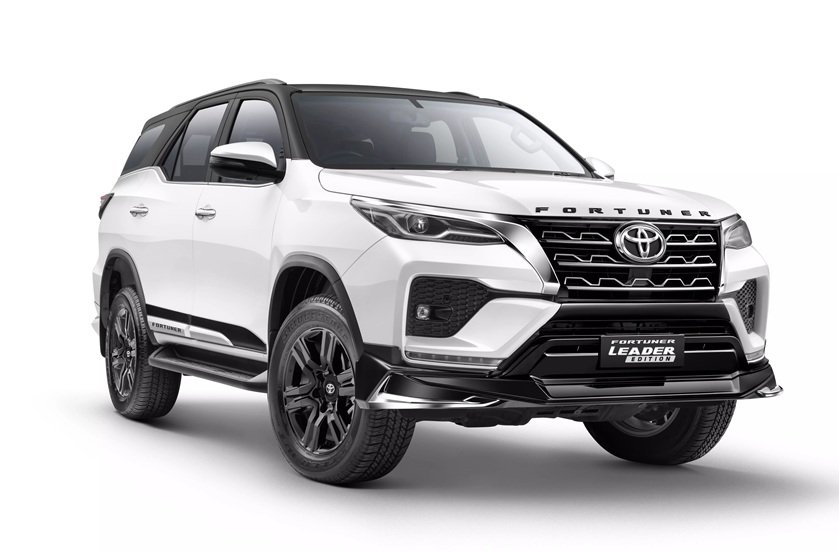
The 2026 model year brings subtle refinements rather than a complete redesign. Spy images reveal:
Updated Elements:
- Revised front grille with larger hexagonal pattern
- New LED headlamp cluster with sequential turn indicators
- Redesigned front bumper with integrated fog lamps
- Updated LED tail lamps with new light signature
- Fresh alloy wheel designs (18-inch standard, 20-inch on Legender)
- Additional color options including potential two-tone schemes
Dimensions are expected to remain largely unchanged:
- Length: 4,795 mm
- Width: 1,855 mm
- Height: 1,835 mm
- Wheelbase: 2,745 mm
- Ground Clearance: 225 mm
The Legender variant continues to offer sportier styling with blackened chrome elements, unique grille design, and distinctive LED lighting signatures that differentiate it from standard models.
Technology & Infotainment: Catching Up with Competition
Toyota has historically lagged behind competitors in this department, but the 2026 update aims to bridge that gap.
Confirmed and Expected Tech:
- Toyota Safety Sense suite with ADAS Level 2
- Adaptive cruise control
- Lane departure warning and lane keep assist
- Automatic emergency braking with pedestrian detection
- Blind-spot monitoring
- Rear cross-traffic alert
- Connected car technology with remote vehicle control
- Over-the-air (OTA) software updates
- Digital key functionality via smartphone
The infotainment system will likely support Toyota’s latest operating system with improved response times and more intuitive menu structures. Voice commands for climate control, navigation, and phone functions should be more accurate than the current generation.
Safety Features: Five-Star Protection
The Fortuner has consistently scored high in safety assessments across global markets. The 2026 model is expected to maintain this standard.
Standard Safety Equipment:
- Seven airbags (driver, passenger, side, curtain, knee)
- ABS with EBD and brake assist
- Vehicle stability control (VSC)
- Traction control system
- Hill-start assist control
- Downhill assist control
- ISOFIX child seat anchors
- Tire pressure monitoring system
- Front and rear parking sensors
4×4 Variants Add:
- Active traction control (A-TRC)
- Multi-terrain select
- Crawl control for low-speed off-roading
The high-strength steel body structure provides excellent crash protection, while the SUV’s commanding seating position offers better visibility compared to sedans and lower SUVs.
Pros & Cons: The Complete Picture
Pros:
✓ Unmatched reliability and low maintenance costs
✓ Excellent resale value (60-65% after 5 years)
✓ Genuine off-road capability with 4×4 variants
✓ Spacious and comfortable for long journeys
✓ Strong dealer network and service availability
✓ Premium brand image and road presence
✓ Proven diesel engine with strong mid-range torque
Cons:
✗ Premium pricing compared to some competitors
✗ Outdated infotainment system (current generation)
✗ Third-row space suitable mainly for children
✗ Noticeable body roll during aggressive cornering
✗ Limited color options compared to rivals
✗ Average fuel efficiency in city conditions
✗ Some hard plastics in lower variants
Who Should Buy the 2026 Toyota Fortuner?
The Fortuner makes sense for several buyer profiles:
Ideal Buyers:
- Families needing a reliable seven-seater for highway trips
- Buyers prioritizing resale value over initial feature count
- Those requiring genuine off-road capability
- Corporate executives seeking a premium brand image
- Multi-generational families preferring spacious interiors
Consider Alternatives If:
- You prioritize cutting-edge technology over reliability
- City driving dominates your usage pattern
- You want maximum features at the lowest price
- Fuel efficiency is your top concern
- You prefer European build quality and dynamics
2026 Fortuner vs MG Gloster: Value or Premium?
The MG Gloster offers compelling value at ₹38-44 lakh, undercutting the Fortuner by ₹3-7 lakh depending on variant.
Gloster Advantages:
- More features including Level 2 ADAS (standard on higher variants)
- Larger touchscreen (12.3 inches standard)
- More powerful diesel engine (218 PS)
- Better third-row space
- Lower initial purchase price
Fortuner Advantages:
- Superior resale value (20-25% higher after 3 years)
- More extensive service network
- Proven reliability record
- Better off-road capability
- Premium brand perception
Verdict: Choose the Gloster if you want maximum features and don’t plan to sell within 5-7 years. The Fortuner makes more financial sense for buyers planning to upgrade within 3-5 years, thanks to exceptional resale value that often offsets the higher purchase price.
Expert Perspective: Market Trends & Ownership Reality
The premium SUV segment is experiencing interesting dynamics. While feature-rich Chinese offerings are gaining traction, Japanese reliability continues to command loyalty among long-term owners.
Market Insights:
Toyota’s strategy focuses on gradual improvements rather than radical changes. This conservative approach frustrates some buyers seeking the latest technology but reassures those prioritizing dependability. The brand’s hybrid push in India suggests a Fortuner hybrid variant could arrive by 2026, following the success of the Hyryder and Innova Hycross.
Real-World Ownership Costs (5-Year Projection):
- Purchase Price: ₹39.5 lakh (2.8 AT 4×2)
- Insurance (5 years): ₹3.2 lakh
- Maintenance: ₹1.8 lakh (₹30,000-40,000 annually)
- Fuel (90,000 km @ 12 km/l): ₹7.1 lakh
- Resale Value (after 5 years): ₹25 lakh
- Total Ownership Cost: ₹26.6 lakh
Service Intervals: Toyota recommends servicing every 10,000 km or 12 months. Average service costs range from ₹8,000 for basic oil changes to ₹25,000 for major services at 40,000 km intervals. Parts availability is excellent across tier-1, tier-2, and tier-3 cities.
Frequently Asked Questions
Q: When will the 2026 Toyota Fortuner launch in India?
The updated Fortuner is expected to debut in India by October-November 2025 or early 2026. Toyota typically launches major updates during the festive season to capitalize on peak buying periods. Official confirmation should arrive 2-3 months before launch.
Q: Will the 2026 Fortuner get a hybrid option?
While not confirmed, industry sources strongly suggest a hybrid variant will join the lineup by late 2026. This would use Toyota’s proven 2.4L turbo-petrol engine paired with an electric motor, offering improved fuel efficiency of 16-18 km/l combined.
Q: Is the Toyota Fortuner worth buying in 2026?
Yes, if you prioritize reliability, resale value, and off-road capability over cutting-edge features. The Fortuner’s total cost of ownership remains competitive despite its premium pricing, thanks to exceptional resale value, low maintenance costs, and widespread service availability.
Q: What is the real-world mileage of the Fortuner diesel automatic?
Owners report 10-12 km/l in city conditions and 13-16 km/l on highways, averaging 11-13 km/l in mixed driving. This is lower than ARAI’s claimed 14.2 km/l but reasonable for a 2-ton SUV with this level of power.
Q: How does the Fortuner compare to the Ford Endeavour?
While the Endeavour offered better on-road dynamics and power, Ford’s exit from India makes it a risky purchase due to parts availability and service concerns. The Fortuner’s extensive service network and assured long-term support make it the safer choice for most buyers.
Key Takeaways: Should You Wait for the 2026 Model?
Best For: Families seeking a reliable seven-seater with excellent resale value and genuine off-road capability. Ideal for highway-heavy usage and those valuing brand reputation over feature count.
Mileage Verdict: Real-world diesel efficiency of 11-13 km/l is acceptable for this segment. Petrol variants lag behind with 9-10 km/l, making them less economical for high-mileage users.
Performance Verdict: The 2.8L diesel offers adequate power for most situations, though acceleration feels lazy below 1,800 rpm. Highway stability and off-road prowess remain segment-leading.
Value for Money: Premium pricing is justified by exceptional resale value (60-65% after 5 years), low maintenance costs, and Toyota’s reliability. Total cost of ownership often beats apparently cheaper competitors.
Overall Recommendation: ★★★★☆ (4/5)
The 2026 Fortuner remains the default choice for premium SUV buyers prioritizing dependability over features. Upcoming updates address key weaknesses like infotainment and safety tech. Current owners planning to upgrade should wait for the new model, while first-time buyers seeking immediate purchase can confidently choose current-generation stocks with attractive discounts.
Final Verdict: A Calculated Evolution
Toyota isn’t reinventing the Fortuner because it doesn’t need to. The formula works—robust mechanicals, proven reliability, and exceptional resale value continue attracting buyers despite competition offering more features at lower prices.
The 2026 update smartly addresses genuine weaknesses (outdated tech, limited ADAS features) while preserving the core attributes that made the Fortuner successful. Potential hybrid variants would future-proof the lineup against tightening emission norms and shifting buyer preferences.
Should you buy it? If your priority list includes “dependability,” “resale value,” and “service network” in the top three, absolutely. The Fortuner won’t wow you with gadgetry, but it’ll reliably transport your family for years while retaining value that often surprises even seasoned car buyers.
For those willing to compromise slightly on brand prestige for better features, the MG Gloster deserves serious consideration. But if you’re planning to keep your SUV for 3-5 years before upgrading, the Fortuner’s resale advantage often compensates for its higher purchase price—making it a financially smarter choice despite the premium positioning.
According to industry analysts, Toyota’s hybrid strategy could significantly impact premium SUV fuel economics by 2027.
Google Discover Headline Variations
- Emotional/Curiosity: “New Toyota Fortuner Spotted—What’s Different This Time?”
- Value-Focused: “2026 Fortuner: Should You Wait or Buy the Current Model?”
- Direct/Informative: “2026 Toyota Fortuner India Launch: Everything You Need to Know”
If you’re exploring upcoming premium SUVs, you may also want to check out the upcoming MG Majestor flagship SUV, which is expected to debut in April 2026.
